Master planning & Urban Design:
Crafting Sustainable and
Inclusive Communities
At the heart of our approach to master planning and urban design lies a deep understanding that buildings are more than isolated structures—they shape the very fabric of our cities and communities. We recognize that every development project extends its influence far beyond the boundaries of its site, impacting surrounding neighbourhoods, ecosystems, and social dynamics. By focusing on these broader connections, we ensure that our designs foster harmony between the built environment and its historical, environmental, and socio-economic contexts.
Integrating Historical Contexts in Urban Design
History is a vital thread in the tapestry of any city. In our master planning projects, we delve into the rich heritage of a location, preserving architectural legacies and cultural landmarks while innovating for the future. This thoughtful integration not only honours the past but also creates timeless spaces that resonate with residents and visitors alike, enhancing the cultural identity of urban areas.
Prioritizing Environmental Sustainability
Environmental stewardship is non-negotiable in modern urban design. We prioritize sustainable urban planning strategies that minimize ecological footprints, such as incorporating green spaces, energy-efficient systems, and resilient infrastructure to combat climate change. Our designs promote biodiversity,efficient water management, and reduced carbon emissions, ensuring that cities remain viable and vibrant for generations to come. Whether it’s through green corridors, urban forests, or adaptive reuse of existing structures, we aim to build environments that coexist seamlessly with nature.
Addressing Socio-Economic Dynamics
True liveability stems from inclusive urban development that considers the diverse needs of all community members. We analyse socio-economic factors to create equitable spaces that bridge gaps in accessibility, affordability, and opportunity. This includes designing mixed-use developments that blend residential, commercial, and recreational areas, fostering economic growth and social interaction. By emphasizingaccessible communities, we support inclusive mobility—think pedestrian-friendly pathways, public transit integration, and barrier-free designs—that empower everyone, from families to the elderly and differently-abled individuals.
Building a Sense of Belonging and Ownership
Our goal in master planning and urban design is to craftliveable cities that inspire a profound sense of belonging and ownership. We achieve this by involving stakeholders through collaborative processes, ensuring that designs reflect the voices and aspirations of the people who will inhabit them. Imaginebustling public plazas that encourage community gatherings, innovative housing solutions that promote social cohesion, or revitalized districts that boost local pride and investment. These elements not only enhance quality of life but also drive long-termsustainability and resilience in urban settings.
Our Expertise in Action: Highlighting Key Projects
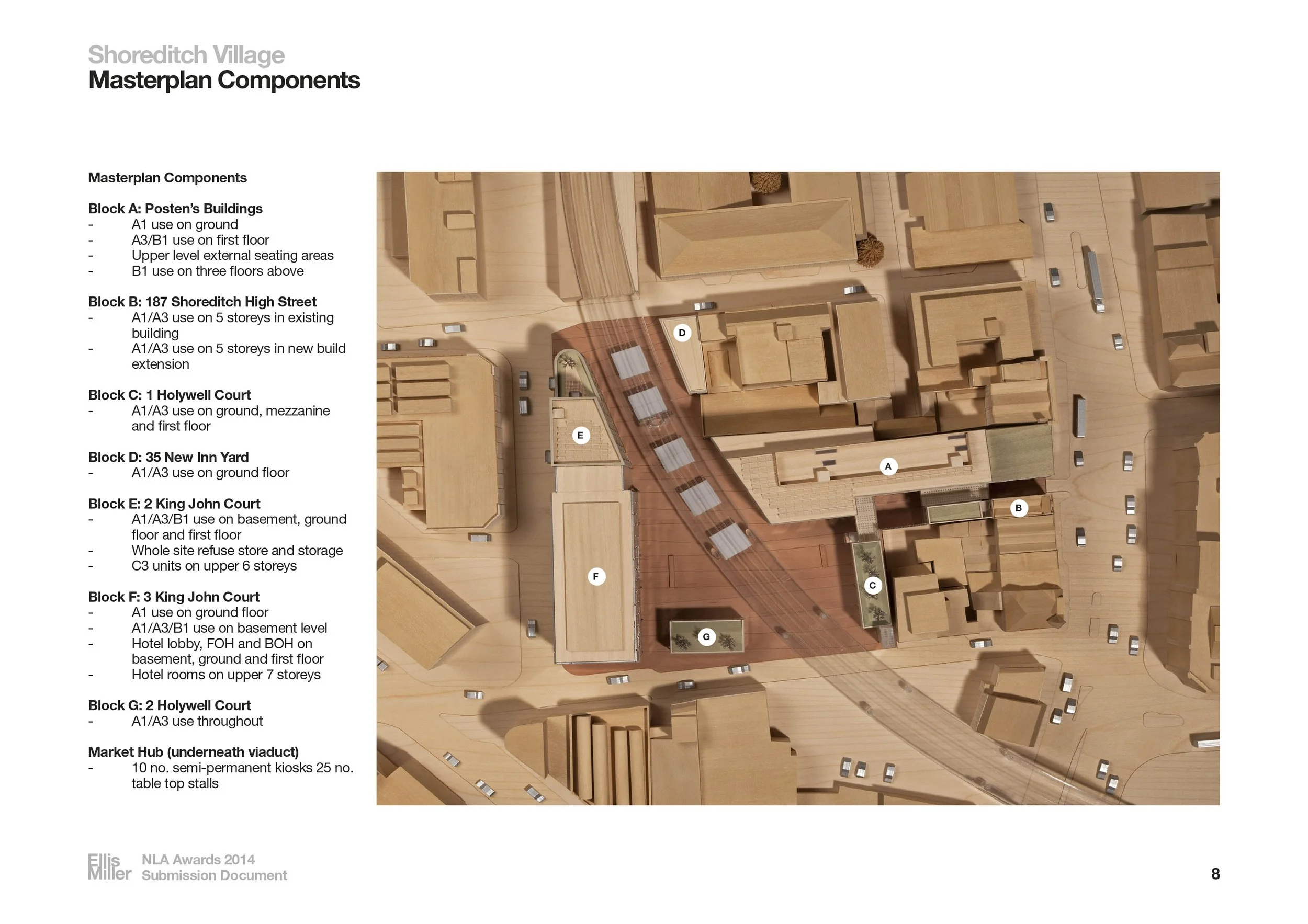
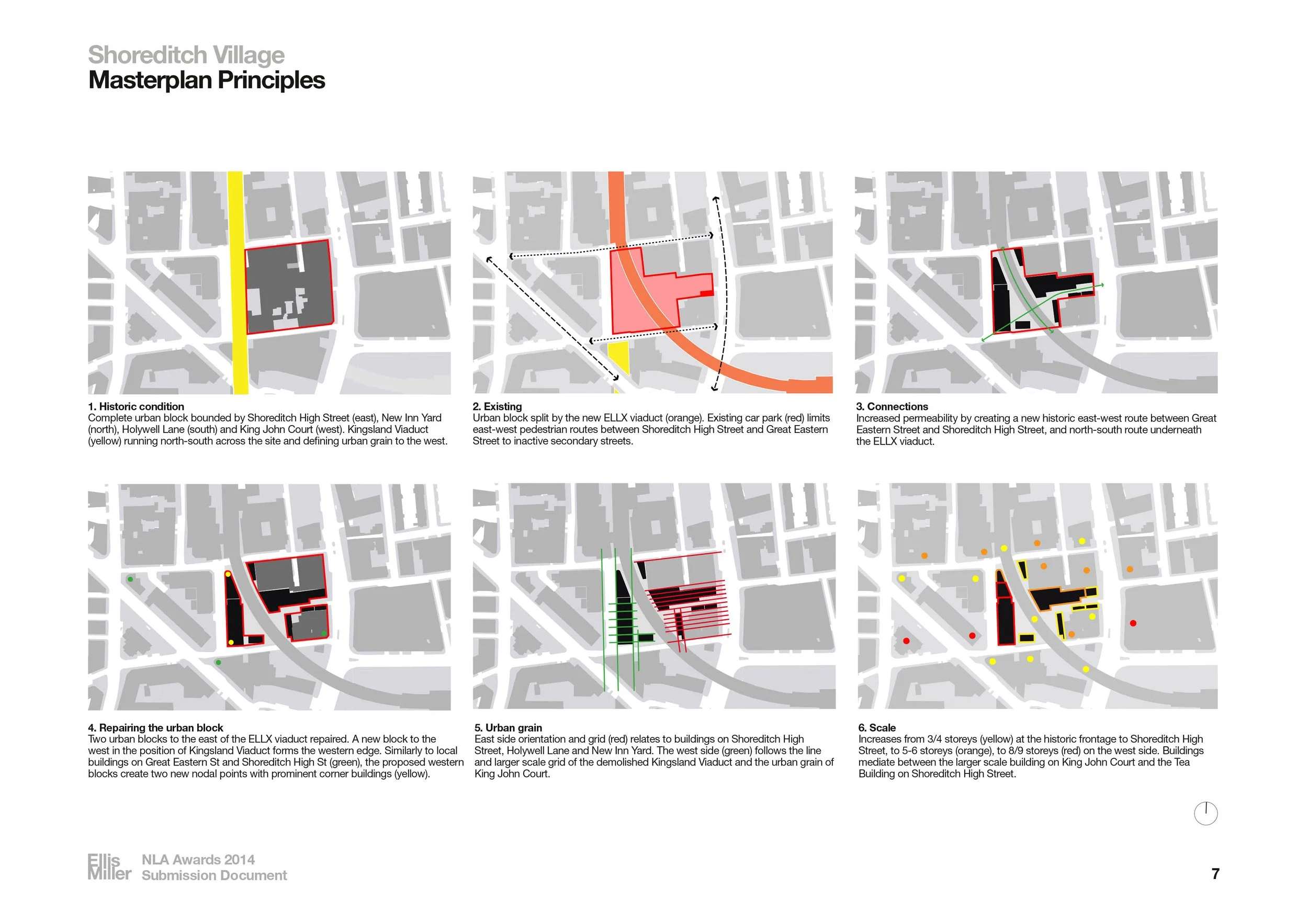
Drawing from our extensive portfolio of master planning projects, we bring proven experience to every endeavour. For instance, our work on the Shoreditch Village masterplan transformed a 14,000 sqm site off Shoreditch High Street into a vibrant mixed-use hub at the heart of London’s creative quarter. This urban design project integrates public spaces, retail, restaurants, residential units, and commercial areas, with a focus on pedestrianized courtyards that reconnect neighbouring retail and commercial districts. Innovative features include a unifying paving scheme, strategically placed trees and benches, permanent market kiosks, and an integrated lighting system that creates a safe, relaxed environment. By enhancing the area around a transport viaduct, we’ve established Shoreditch Village as a key open space in London’s East End, blending heritage with modern functionality to foster community vibrancy and economic growth.
Our innovative masterplan in this high-profile London location showcases cutting-edge approaches to urban regeneration. We navigated complex site constraints—including rail infrastructure, height restrictions, daylight requirements—to deliver a transformative development. This project expands usable space significantly, incorporating flexible areas for residential, commercial, and leisure activities while prioritizing sustainability and heritage preservation. Enhanced transport connectivity, green initiatives, and mixed-use elements create a resilient, inclusive neighbourhood that adapts to the city’s evolving demands, demonstrating our commitment to forward-thinking urban planning on a prominent scale.
Through our expertise in sustainable master planning, we transform visions into reality, creating dynamic, resilient, and inspiring urban landscapes. If you’re seeking innovative urban design services to elevate your project, let’s collaborate to build cities that thrive for all.
Catmose Campus Masterplan
Oakham Rutland
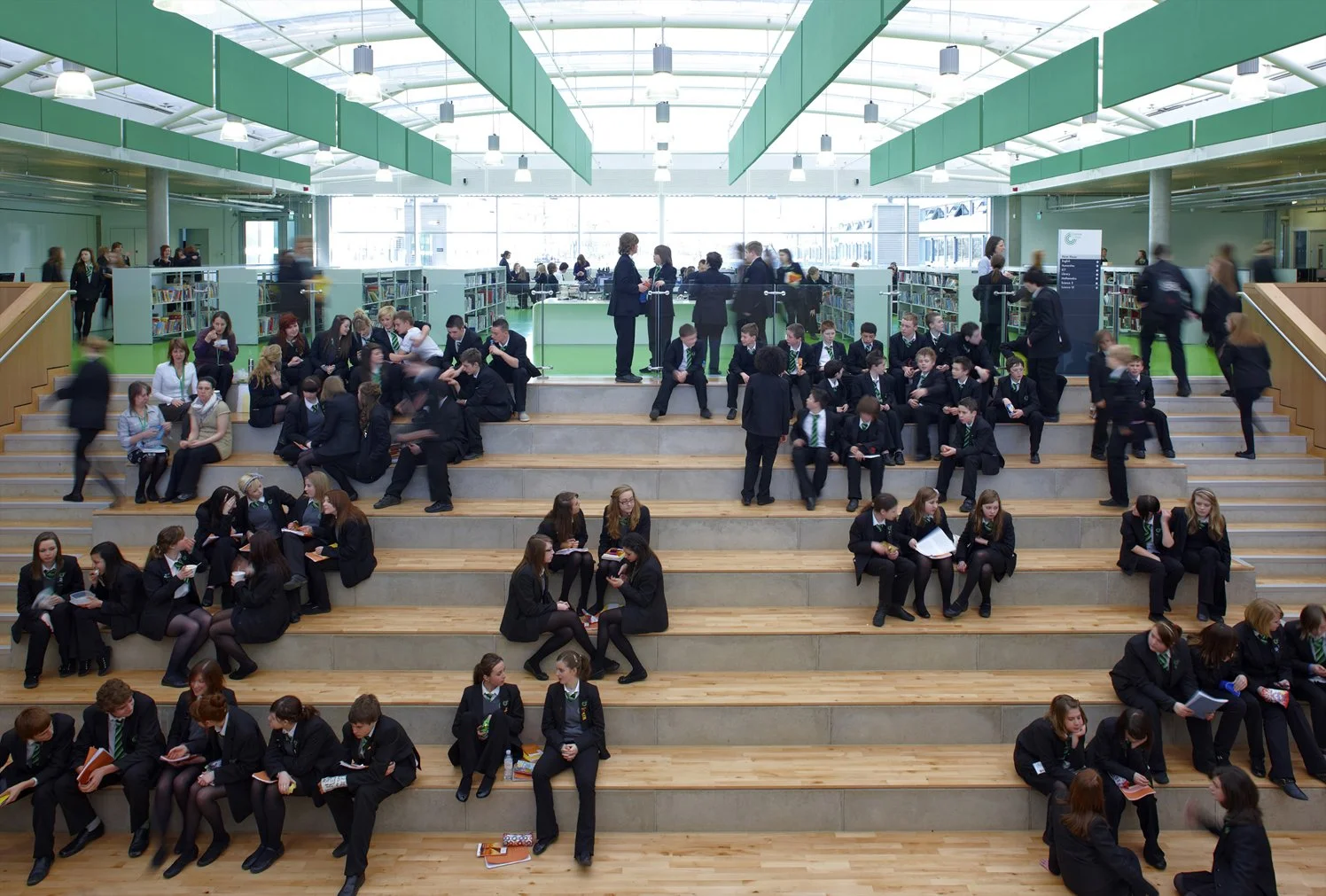
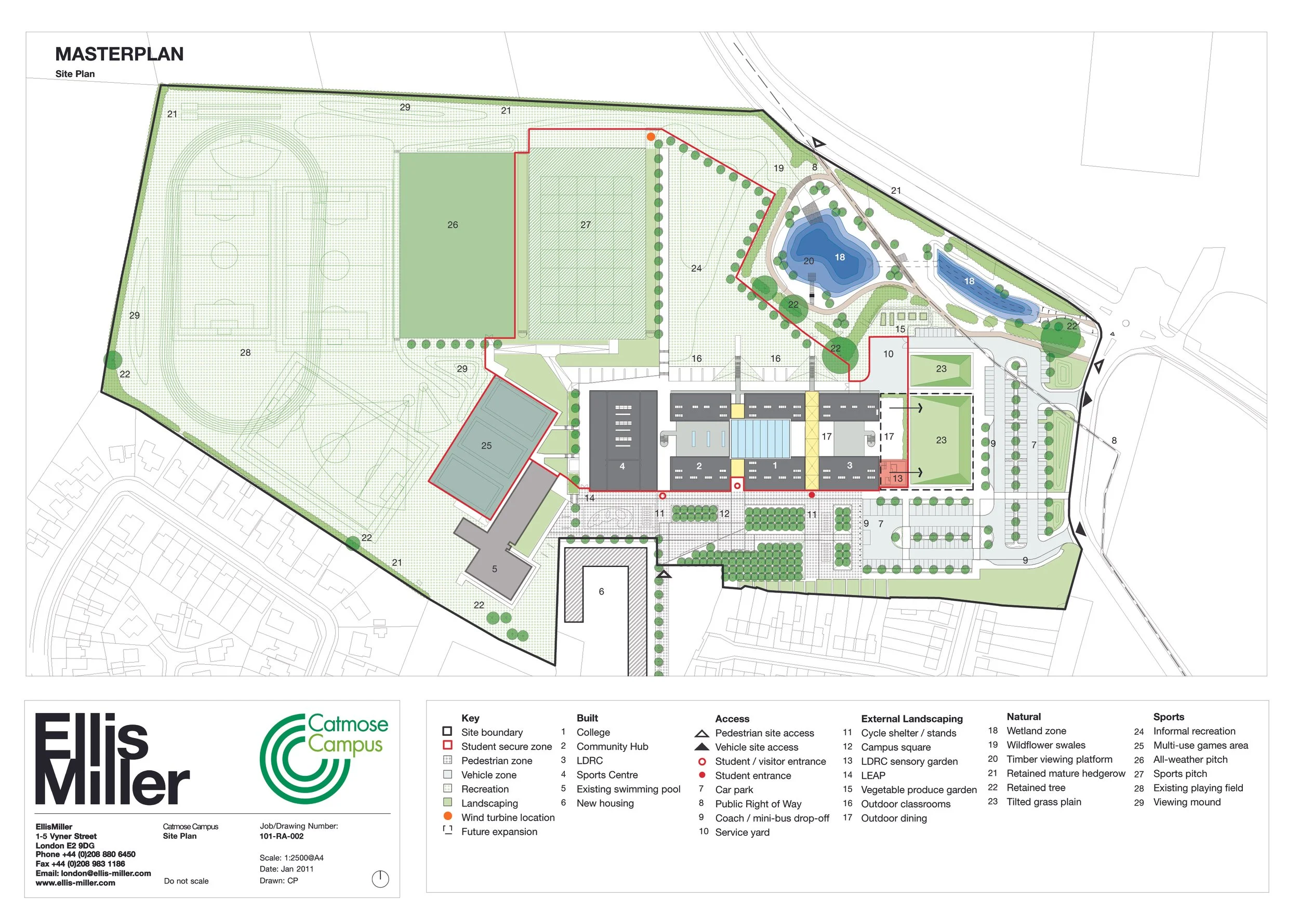
Ellis-Miller + Partners master planned and designed the entire Catmose Campus in Oakham, Rutland, delivering a visionary, multi-stakeholder educational and community hub. Led by Jonathan Ellis-Miller, the practice took the project from initial concept through RIBA Stages 1-7 of the development.
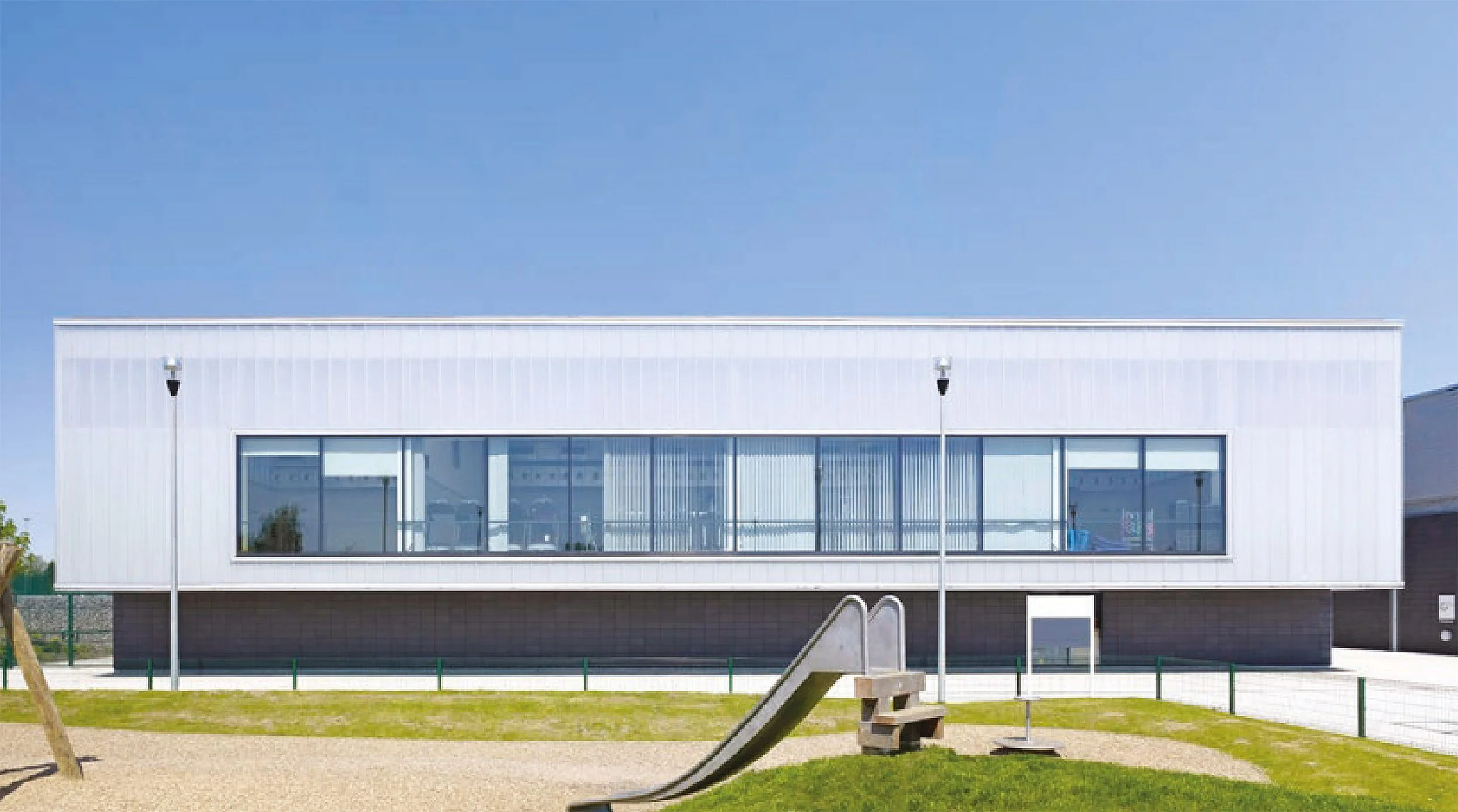
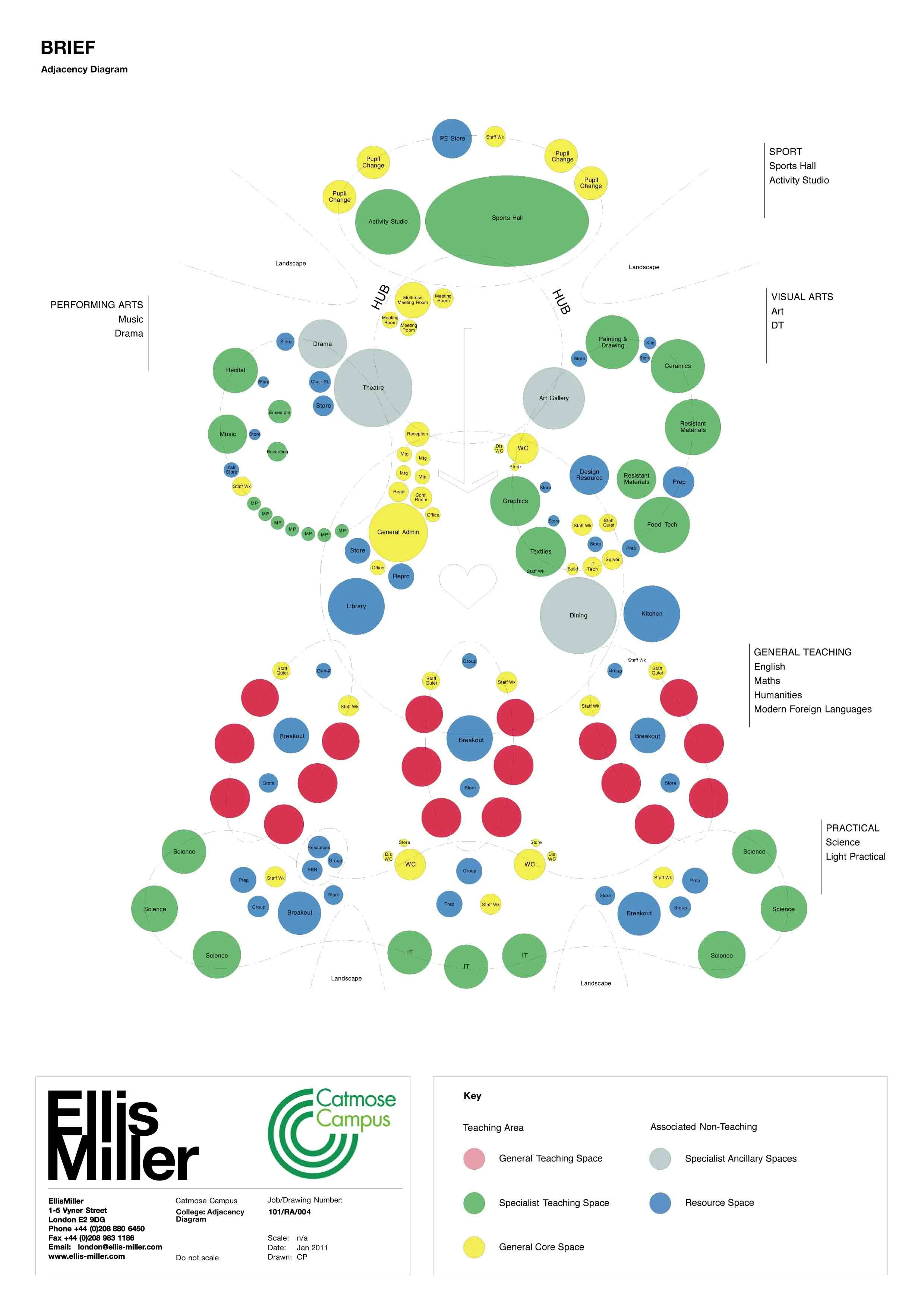
Ellis Miller + Partners rigorous modernist approach established a clear architectural diagram on a strict grid, with aluminium-clad pavilions elevated on concrete columns to prioritise legibility, accessibility, natural light, and long-term adaptability. This modular campus layout creates a flexible "machine for learning" that supports personalisededucation, independent study, cross-curricular collaboration, and varied group dynamics, while integrating ubiquitous wireless ICT for seamless, anywhere-anytime access.
At the core is Catmose College, a 900-place outstanding secondary academy (Ofsted), surrounded by shared community facilities:
Catmose Sports Centre – a high-spec county venue with sports hall, gym, dance studios, floodlit pitches, and courts for school and public use.
Catmose Theatre – a versatile auditorium for drama, performances, assemblies, and lectures.
Catmose Gallery – dedicated exhibition space for visual arts and cultural events.
Huntsman Drive Housing - Housing scheme for social and market housing.
Harrington College 6th Form
The masterplan also incorporated a complementary housing scheme, enhancing the site's mixed-use character and broader community integration in Oakham’s rural location.
Achieving BREEAM Very Excellent and winning a RIBA Award amongst many other, Catmose Campus exemplifies Ellis-Miller and Partners expertise in masterplanning, community consultation and creating new communities for the 21st Century.
Shoreditch Village
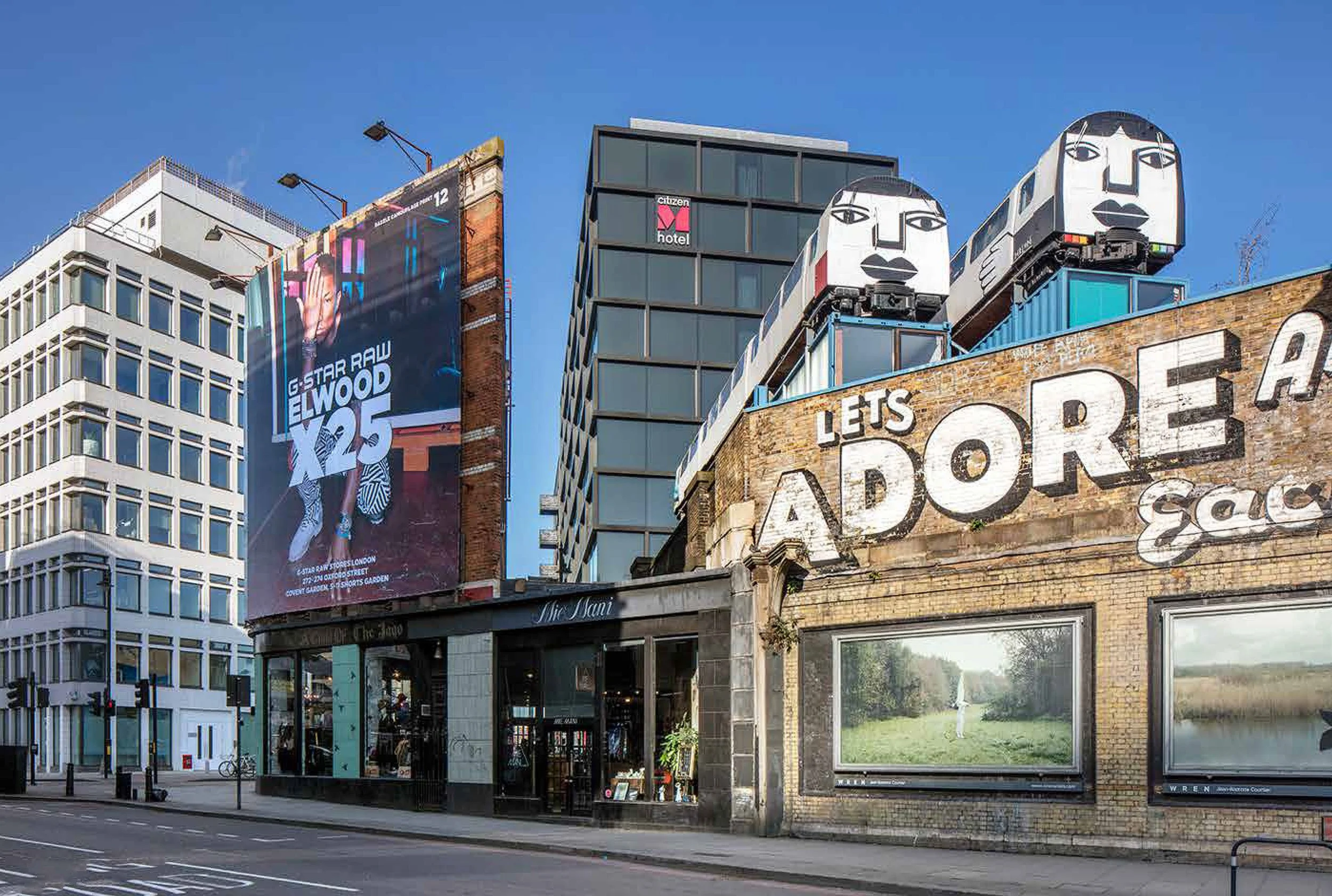
Ellis-Miller + Partners led the groundbreaking Shoreditch Village masterplan from 2011 to 2024, showcasing their mastery in urban regeneration by redeveloping a 14,000 sqm derelict site in London’s East End into a dynamic mixed-use neighbourhood. Their innovative framework, integrating historic street patterns, re-east list routes east to west across the site that had been disrupted by the construction of the new TFL East London Line. A series of interlinking south facing courtyards were created, each having a different scale, bounded by active ground-floor frontages and creative repurposing of railway structures, tackled extraordinary planning and construction challenges, resulting in a unified urban tapestry that honours Shoreditch’s industrial legacy while fostering contemporary community life.
Ellis-Miller + Partners pivotal contributions included orchestrating a comprehensive masterplan, obtaining detailed planning consent for phases 1 and 2 and listed building consents and co-ordination of a diverse team of designers. The valuable consents granted addressed the site’s fragmentation beneath the newly operational East London Line viaduct, contending with multiple landowners, conservation area stipulations, Grade II-listed Georgian townhouses, Victorian arches, and entrenched historic rights-of-way. Planning complexities involved protracted negotiations with Hackney Council for 2013 approvals, incorporating archaeological assessments and community consultations to resolve potential disputes over permeability and heritage impacts. Construction obstacles encompassed engineering solutions for train-induced vibrations, phased sequencing to limit local disruption, and adaptations for Brexit-related supply delays and the 2020 pandemic, which pushed Montacute Yards’ completion to 2023. Their adaptive design ethos transformed these hurdles into assets, such as elevating the Braithwaite Viaduct into London’s inaugural linear park. The area has tranfromed from a disused wasteland into a vibrant part of the fabric of the creative East of London. It was the initial vision by Ellis-Miller + Partners that allowed this transformation to occur.
Full Project page can be viewed here.
Florentia Village
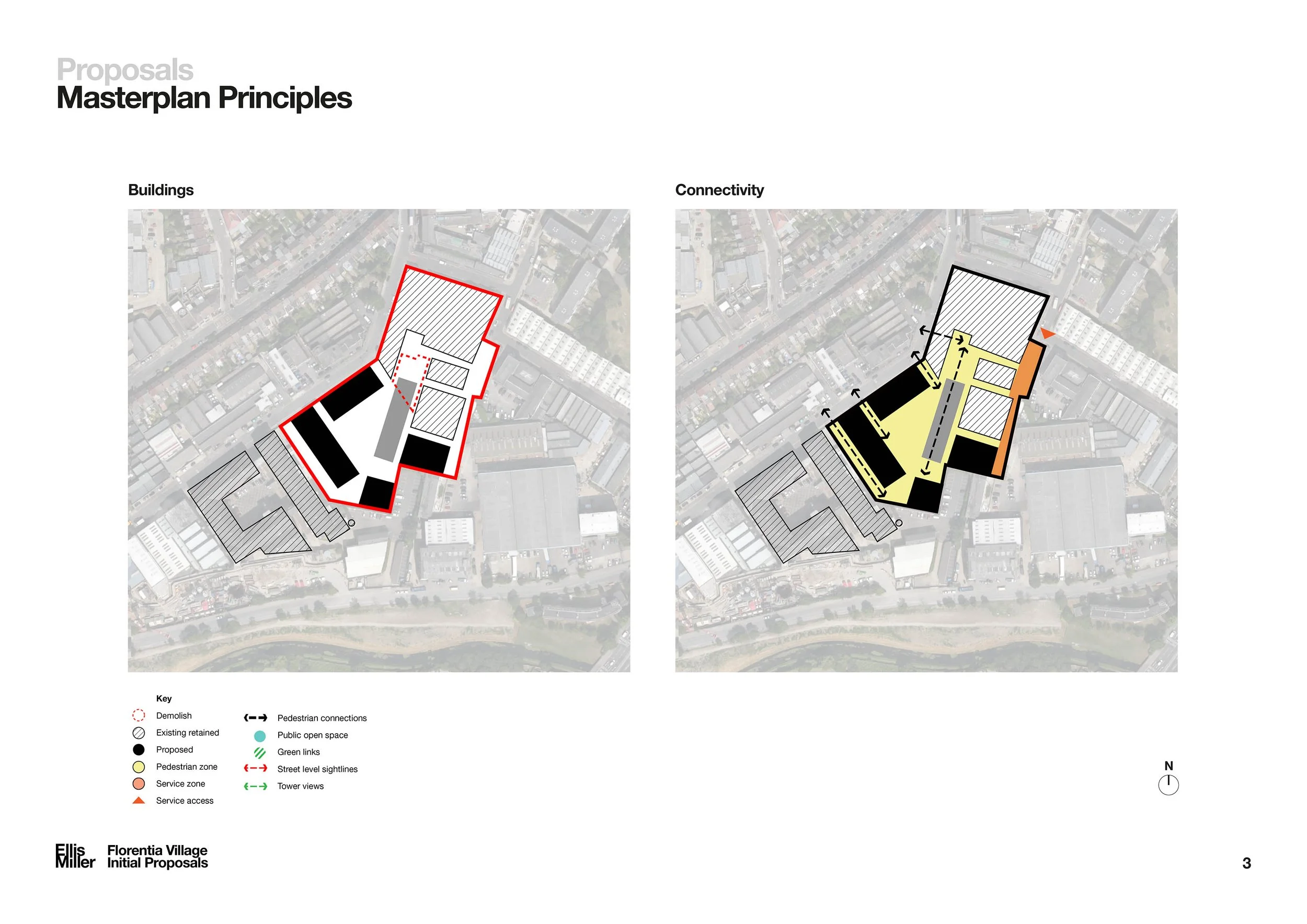
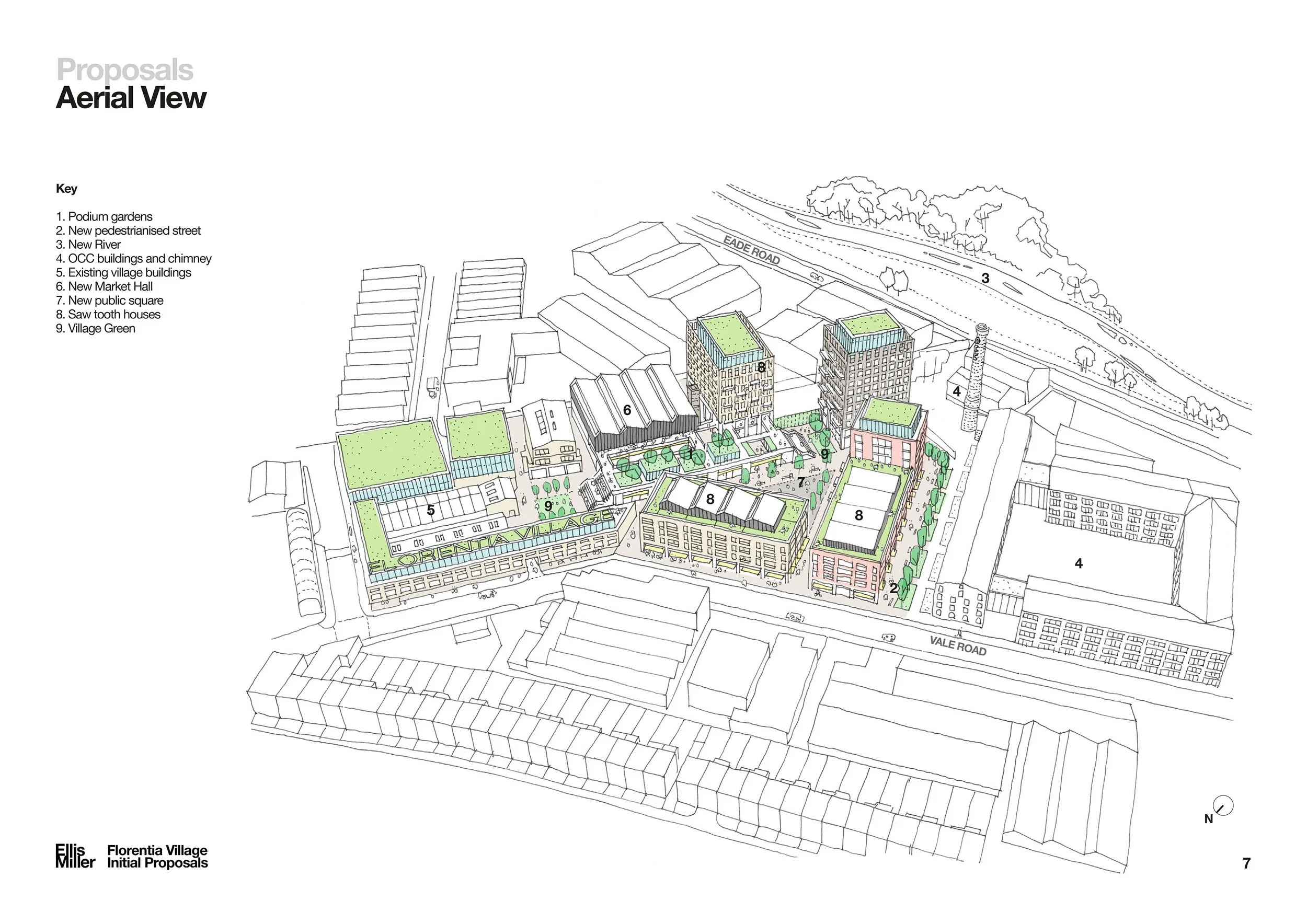
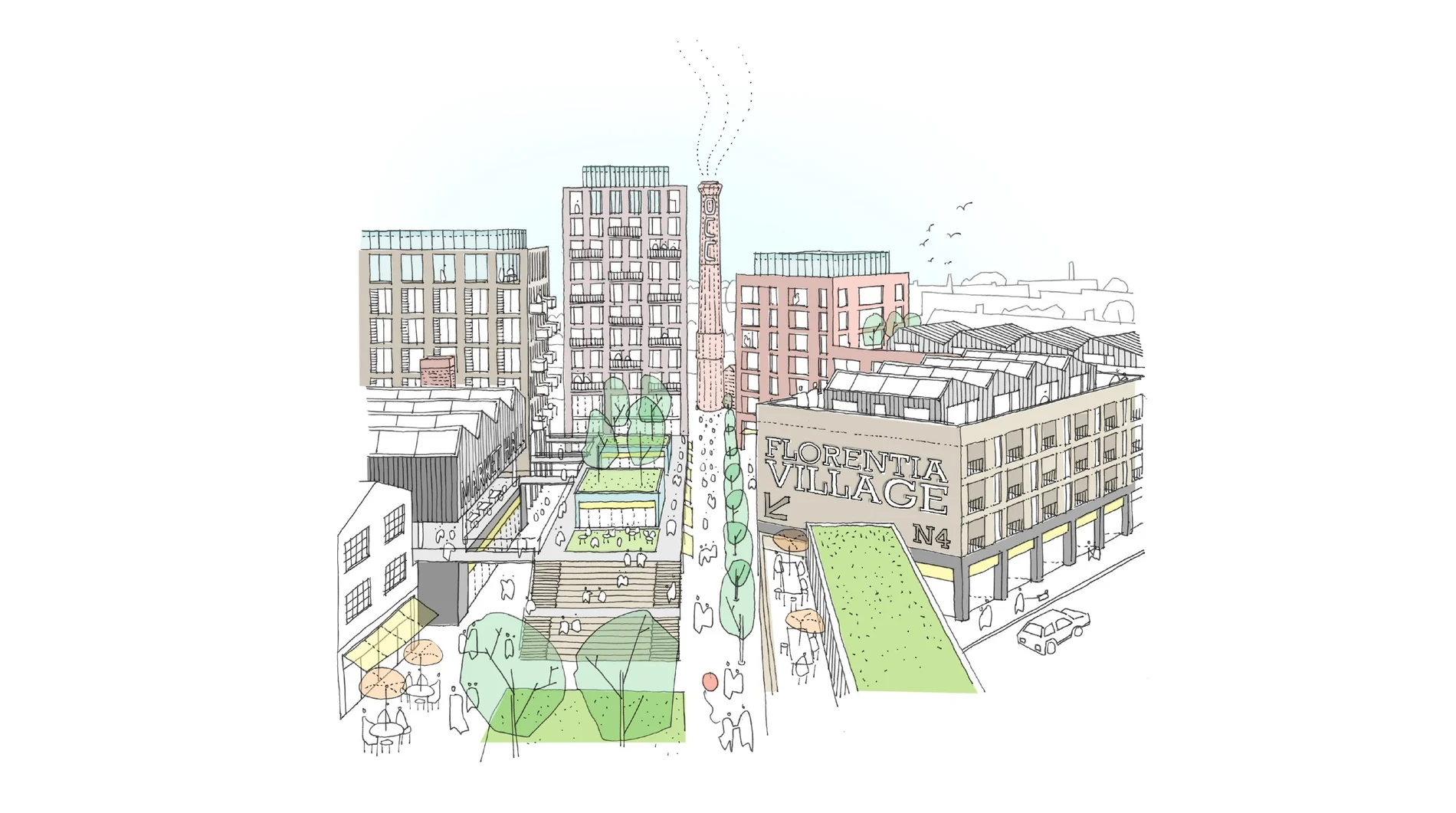
Florentia Clothing Village is a 5.5-acre riverside site in Tottenham Hale, N4, poised to become one of North London’s most characterful new neighbourhoods. The evolving masterplan, led by Ellis Miller Architects, retains and creatively re-uses the robust concrete-framed warehouse buildings that have housed independent fashion businesses for decades, while introducing carefully scaled new-build elements to deliver a genuine mixed-use urban village on the edge of the Lee Valley Regional Park.
The proposed scheme delivers approximately 42,000 m² of new and refurbished floorspace configured as follows:
Residential (C3) – c. 24,300 m²
A mix of affordable and private homes ranging from studios to family-sized apartments, primarily within sensitively extended existing buildings and four new-build pavilions.Flexible Retail, Café/Restaurant & Market Hall (A1/A3) – c. 7,900 m²
Independent shops, cafés, restaurants and a double-height 1,940 m² covered Market Hall at the heart of the village, animating the public realm and preserving Florentia’s historic role as a creative and trading hub.Creative Workspace (B1/sui generis) – c. 5,300 m²
Retained and upgraded studios and offices for existing fashion and maker businesses, plus new flexible workspace for start-ups and growing creative enterprises.Community & Leisure uses (F1/F2/D2) – to be incorporated within retained structures.
The design strategy combines adaptive re-use of 16,678 m² of the best existing warehouse fabric with 21,008 m² of considerate new-build and 5,336 m² of additions (roof extensions, infill structures and courtyard insertions). This approach preserves the raw industrial character, dramatically reduces embodied carbon, and keeps the soul of Florentia intact while achieving the density and mix required for a viable, vibrant 21st-century neighbourhood.
Extensive pre-application consultation with Haringey Council, local residents and existing tenants is shaping the proposals, with two planning routes under consideration: a full detailed consent (as successfully delivered at Shoreditch Village) or a hybrid parameter-based masterplan allowing phased delivery.
Florentia Village will be an authentic, inclusive and sustainably delivered new piece of London – rooted in its creative past, open to the riverside, and built for the future.