Chalk Hill
Cambridgeshire
Client:
Simon and Karen Crosbie
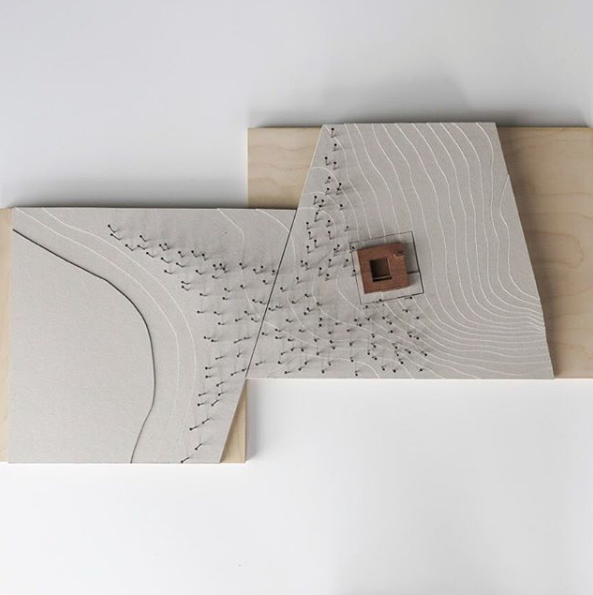
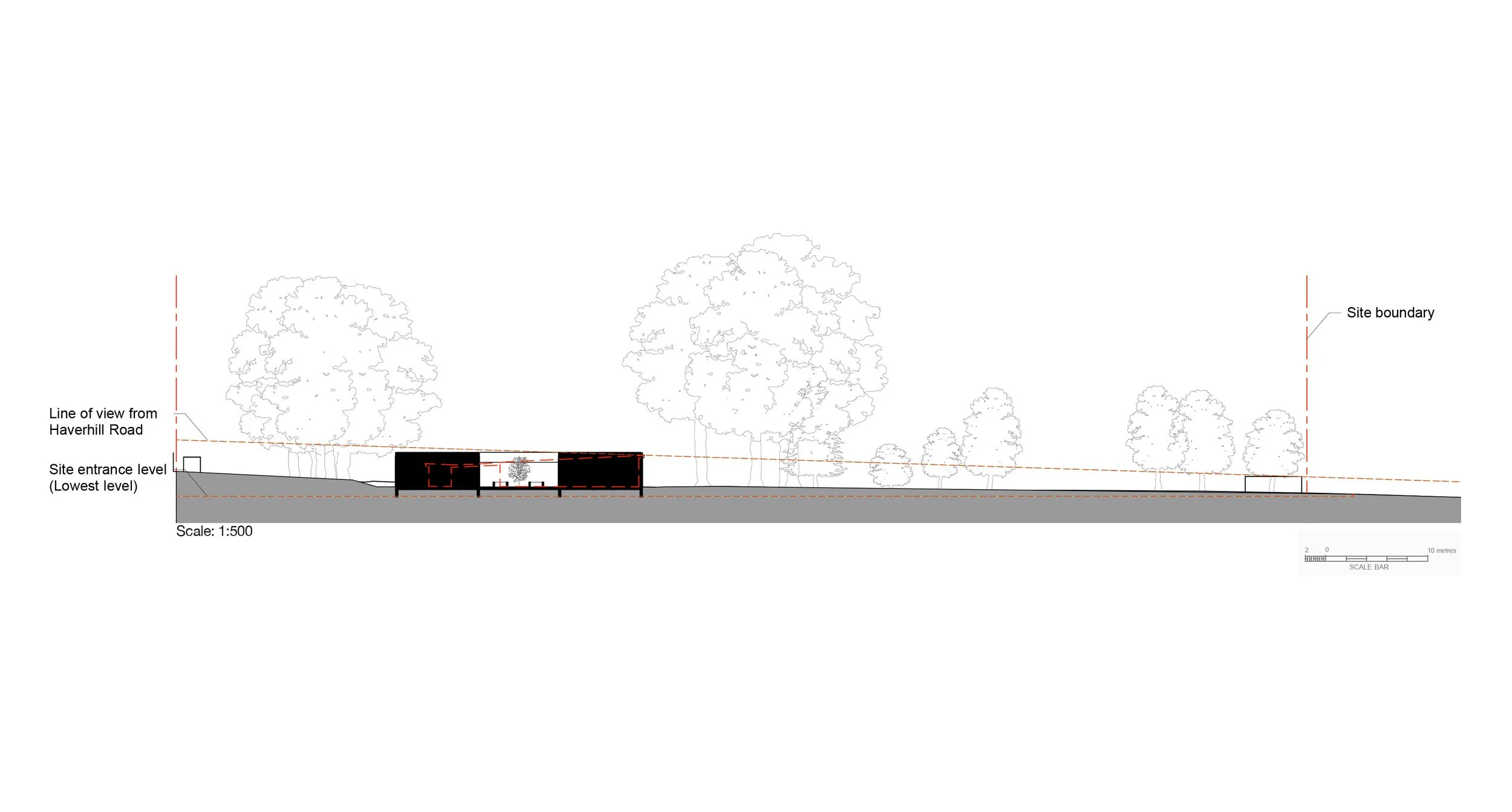
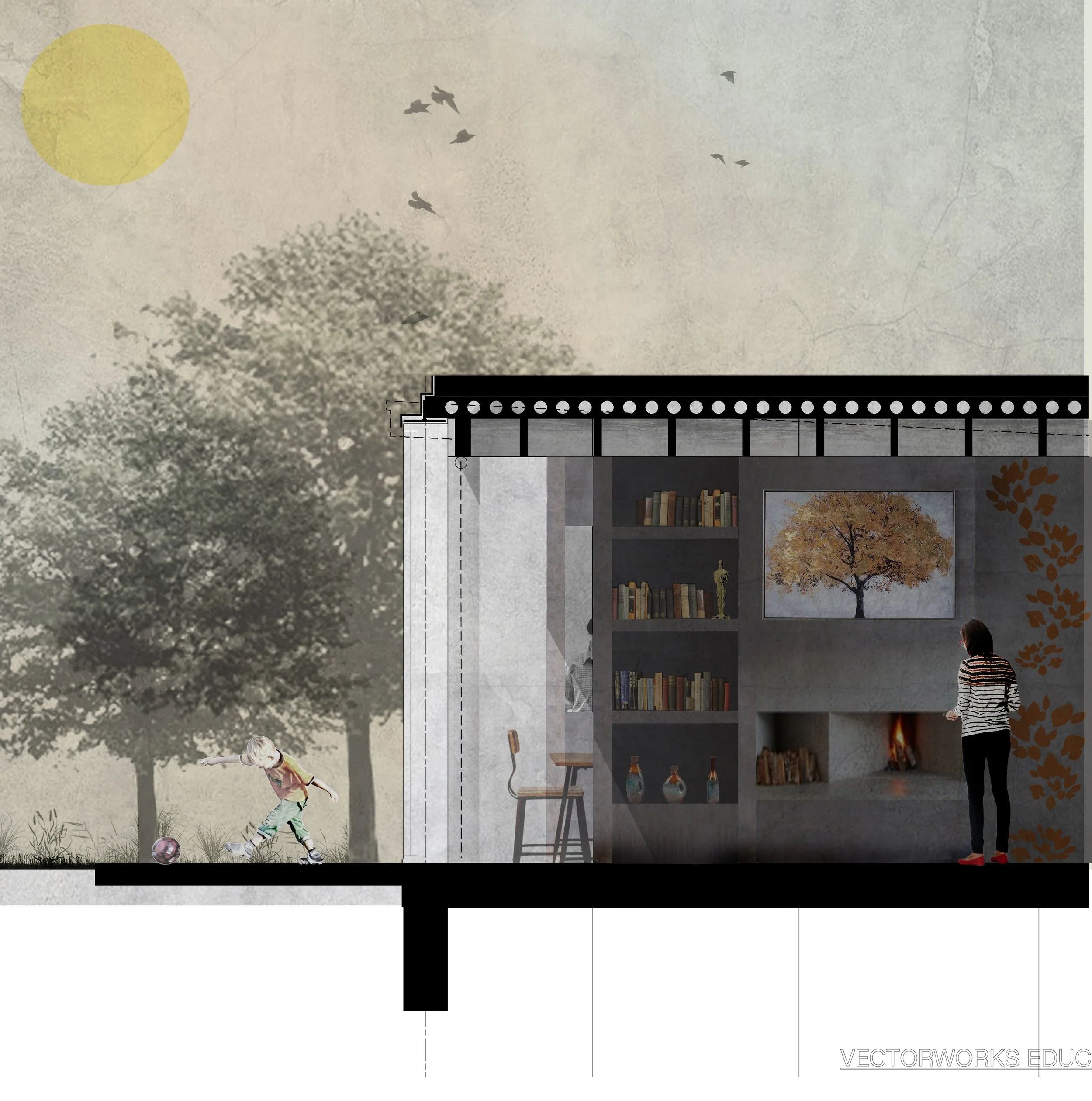
Perched on the Gog Magog Hills in Cambridge, Chalk Hill, drawing inspiration from the iconic Ellis-Miller and Banham houses while echoing the innovative spirit of mid-20th-century Case Study Houses. Designed by Ellis-Miller and Partners this 562 sqm residence seamlessly blends minimalist aesthetics with cutting-edge sustainability, creating a carbon net zero home that prioritises adaptability and environmental harmony. The site’s elevated position affords wonderful views across the East Anglian landscape, integrating the house with its historic surroundings and enhancing the sense of connection to nature. These hills hold a rich archaeological legacy, with Wandlebury—part of the Gog Magog range—featuring evidence of Roman occupation. Originally an Iron Age hillfort, Wandlebury transitioned into Roman use around the 1st century AD, with artifacts like coins, a ring, and a nearby Roman road indicating continued habitation or activity. This subtle integration of Roman and native British elements reflects a period of cultural blending, where the site served as a strategic vantage point along trade routes, though without major Roman structures, suggesting a modest, adaptive settlement.
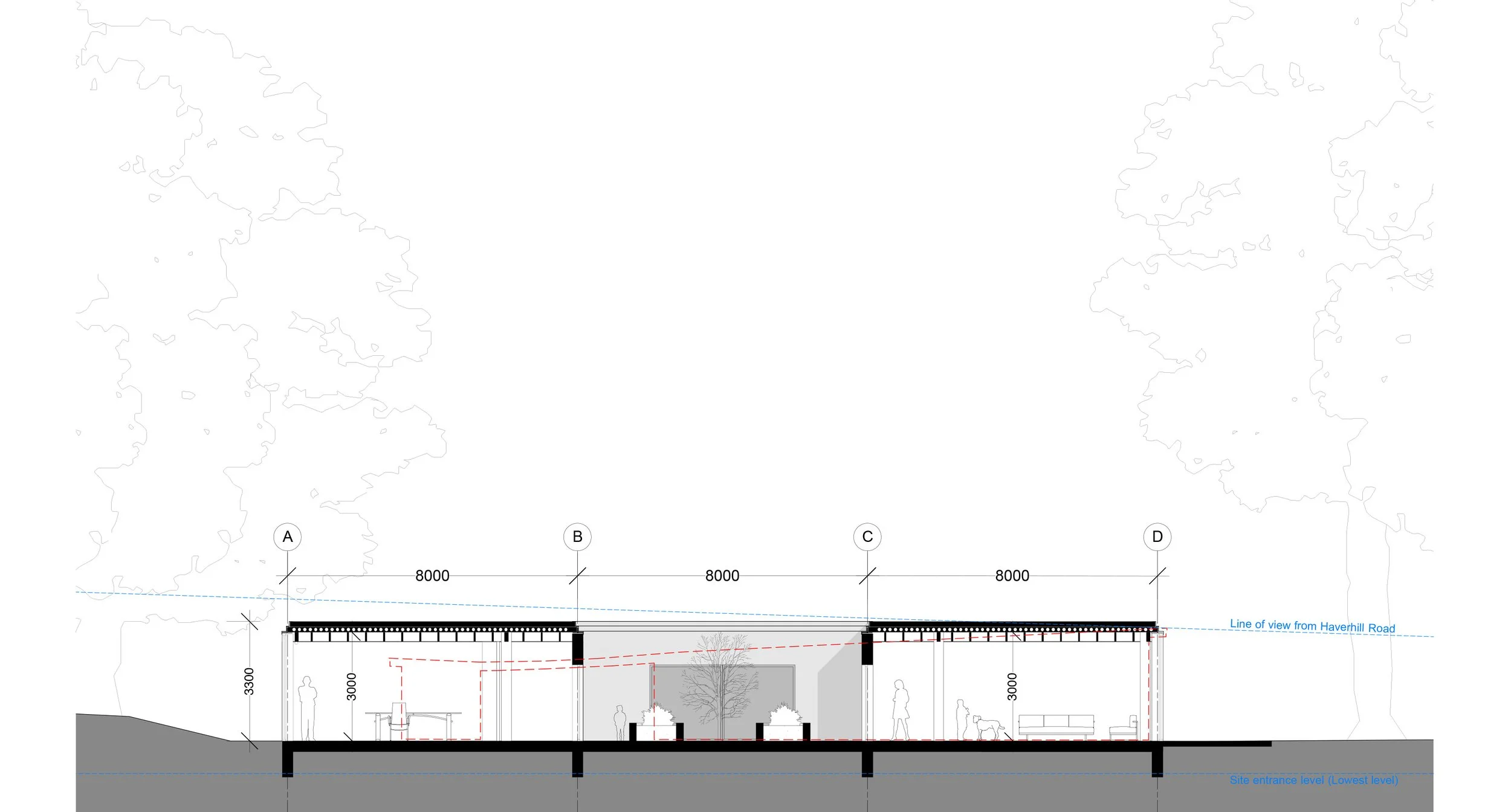
Arranged around a central landscaped courtyard, the layout fosters a sense of inward-focused tranquillity, where living spaces flow organically, blurring indoor-outdoor boundaries and enhancing natural light penetration—ideal for Cambridge’s variable climate. The courtyard itself was inspired by the idea of a Roman villa, evoking the ancient atrium designs that once dotted these hills, promoting natural ventilation and communal living in harmony with the landscape.
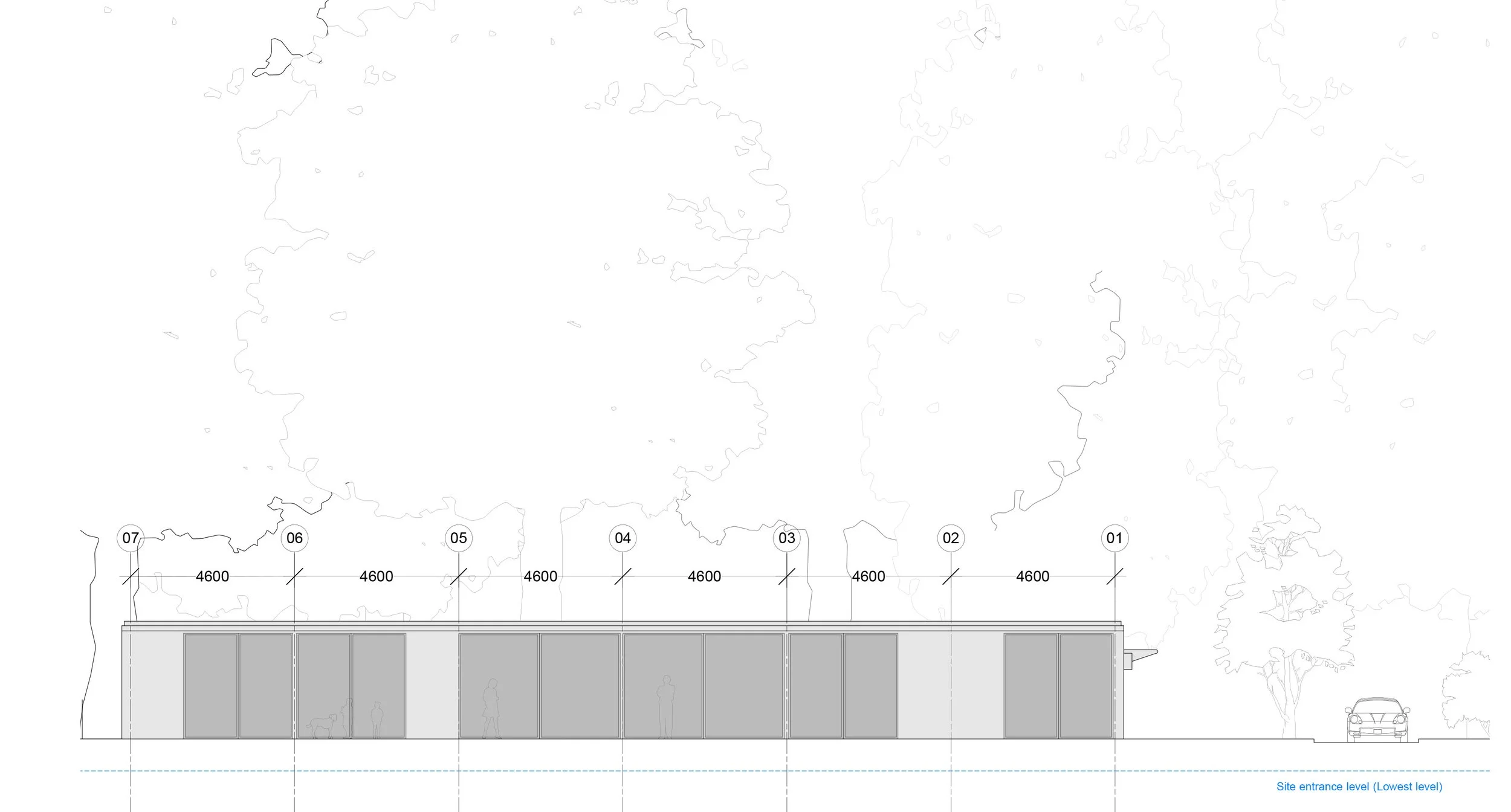
The structural grid mirrors the 4.6m x 4.0m module of the original Ellis-Miller House, providing a rhythmic, modular framework that allows for flexible room configurations. This grid not only pays homage to Jonathan Ellis-Miller’s modernist roots but also enables future expansions or reconfigurations, addressing evolving family needs or technological advancements. Heavyweight elements, such as exposed concrete floors and walls, are introduced to bolster thermal performance, acting as thermal mass to regulate temperatures passively. This reduces heating demands in winter and overheating risks in summer, with implications for long-term energy savings and occupant comfort.
Sustainability is at the core, making Chalk Hill a blueprint for net zero living. Ground source heat pumps provide efficient heating and cooling, supplemented by an integrated oven for low-energy cooking. Rainwater harvesting systems collect and reuse water for irrigation and non-potable uses, while on-site boreholes ensure a resilient water supply, mitigating drought vulnerabilities in East Anglia. High levels of insulation combined with intelligent solar shading, such as automated external blinds, optimise solar gain and prevent glare, achieving exceptional energy efficiency. These features collectively minimise the carbon footprint, with potential for off-grid adaptability through future solar PV integration and wind turbine generation.
From an architectural nuance, Chalk Hill explores the balance between heritage and innovation: its courtyard design echoes Roman villa concepts from the Gog Magog Hills, yet incorporates smart tech for climate responsiveness. It promotes well-being, with spaces adaptable for multi-generational living or home offices.