Client:
University of Cambridge
In 1995 Ellis-Miller + Partners, led by Jonathan Ellis-Miller in his first collaboration with Barry Coupe, won the limited competition to design a new home for the Faculty of Divinity on the University of Cambridge’s Sidgwick Site – one of the most architecturally distinguished modern campuses in Britain.
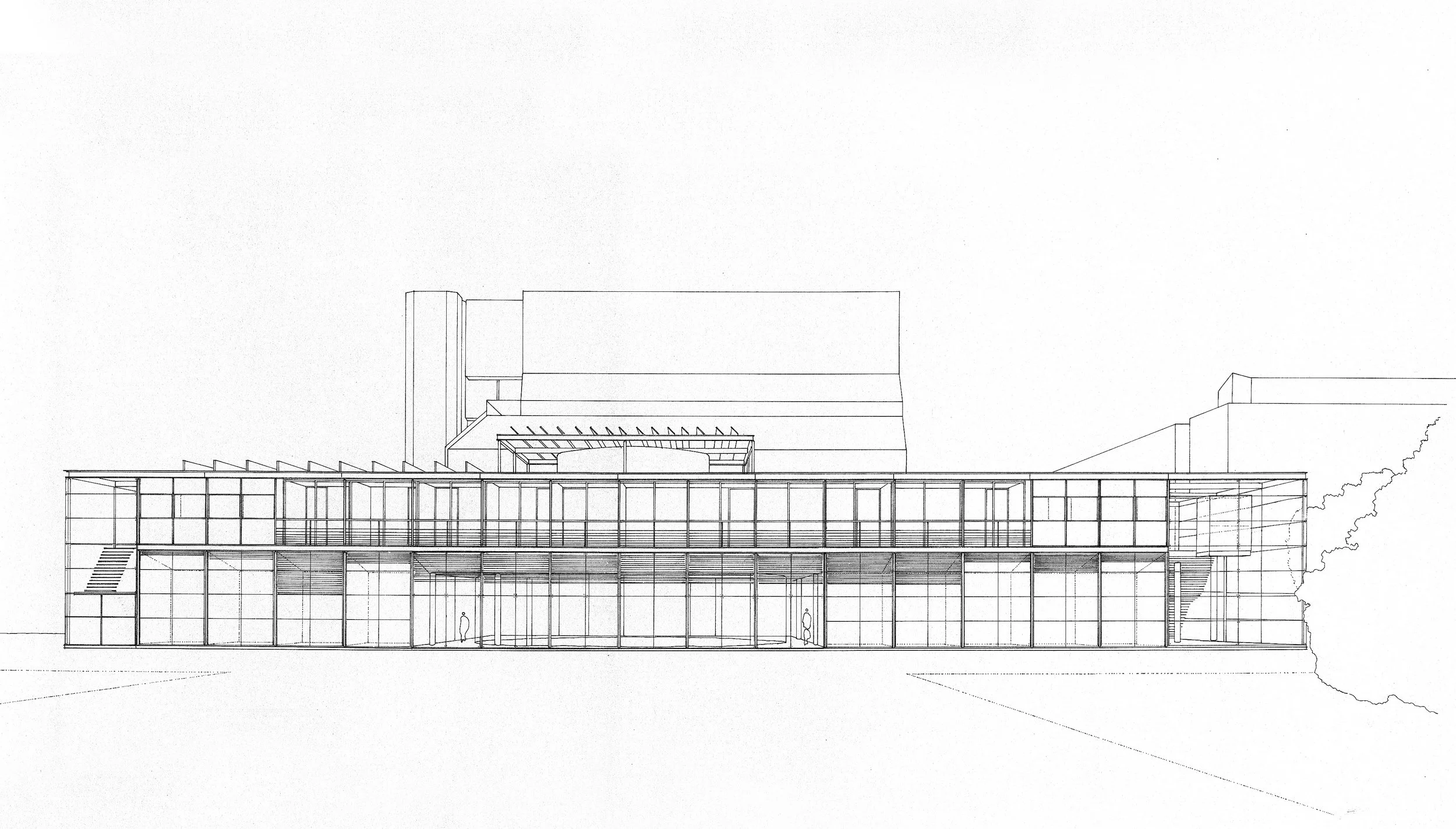
The site is dominated by two masterpieces of late-20th-century architecture: James Stirling’s red-brick History Faculty (1964–67) with its dramatic glazed roof, and the newly completed Foster + Partners Law Faculty (1990–95). The brief called for a building of quiet authority that would sit comfortably alongside these powerful neighbours while providing a serene, contemplative environment suited to theological study and scholarship.
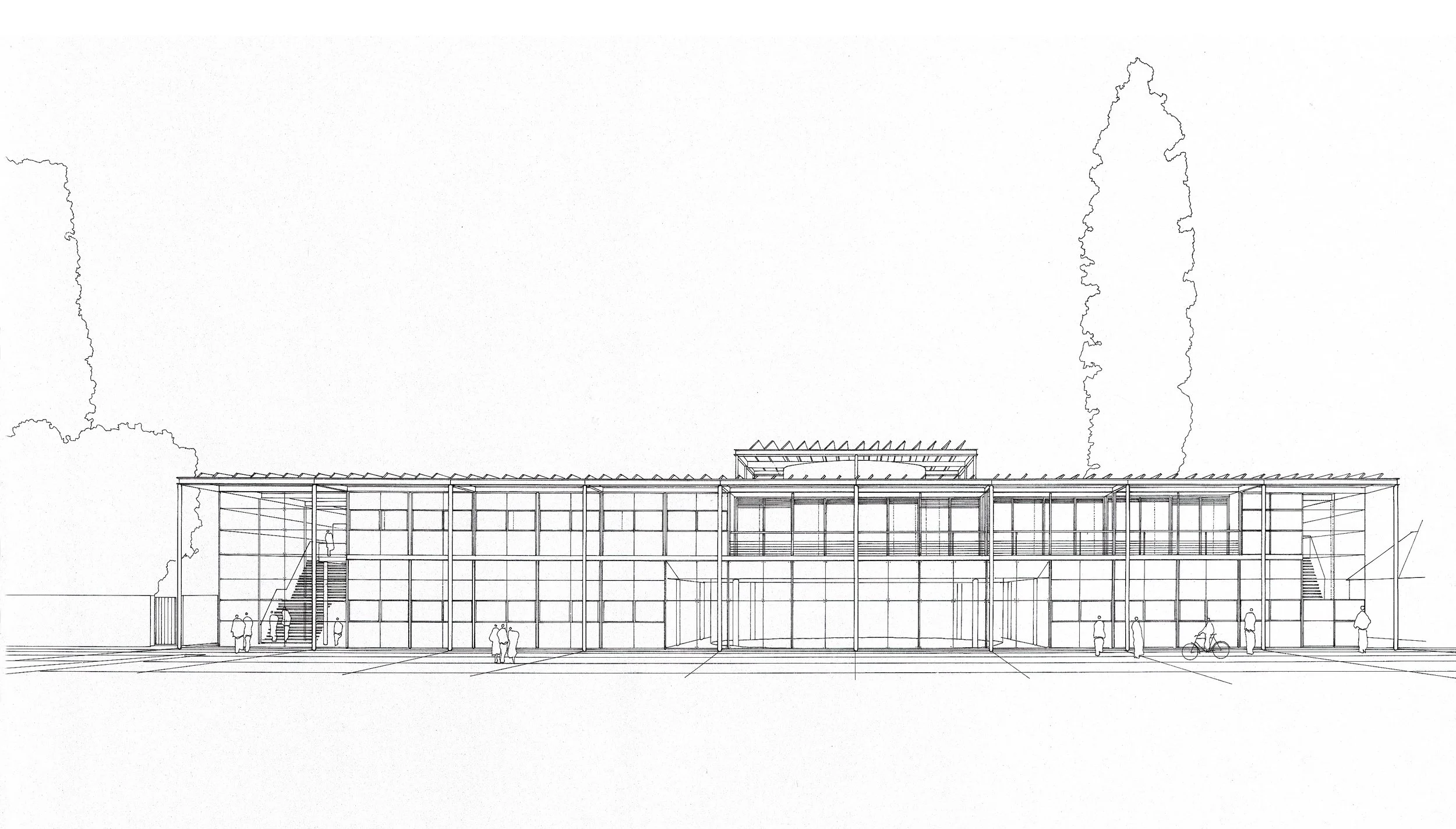
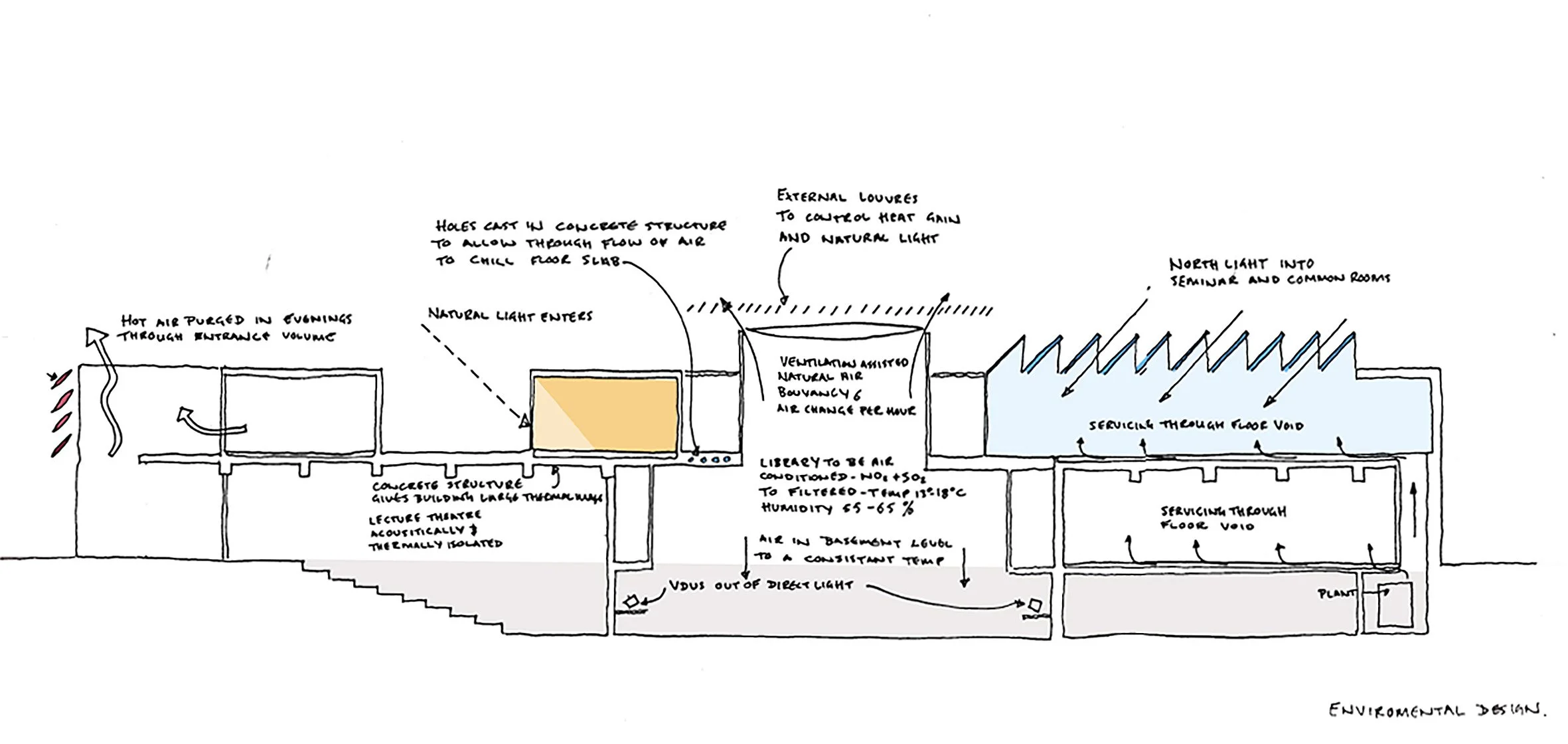
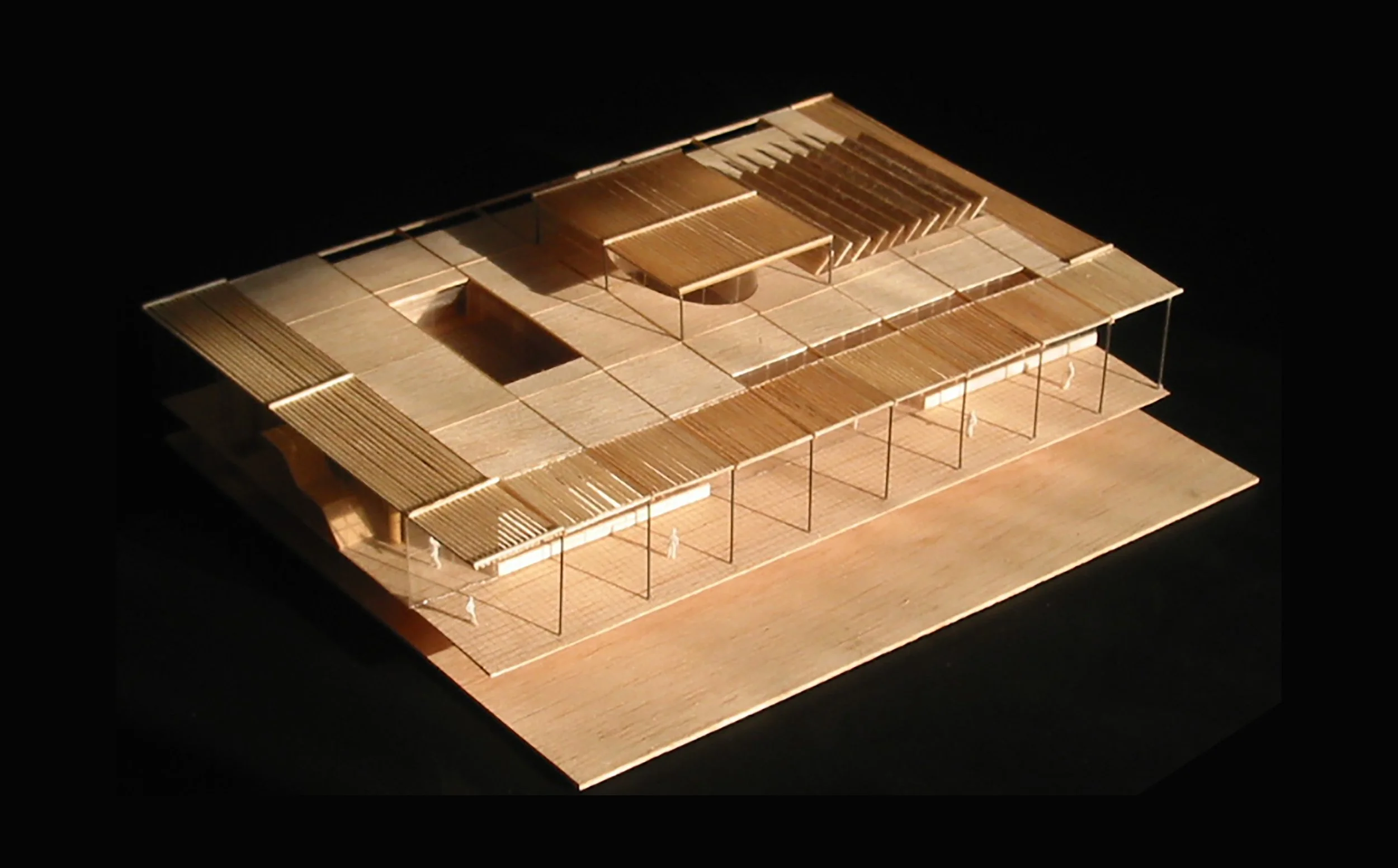
The winning scheme was built around a breathtaking triple-height rotunda library – a perfect elliptical volume rising through all three storeys and crowned by a continuous clerestory and central oculus. This dramatic top-lit space formed the intellectual and spatial heart of the faculty. Clad externally in terracotta carefully matched to Stirling’s palette, the rotunda read as a calm, almost classical drum that mediated between the angularity of the History Faculty and the sleek precision of the Law Faculty. Internally, the library was to be fitted with 1,500 linear metres library shelving, arranged on three gallery levels to house 60,000 volumes in an atmosphere of extraordinary lightness and tranquillity.
Around the rotunda, a clear rectangular envelope contained offices for University Teaching Officers and research staff, all naturally lit and ventilated, together with a 120-seat raked lecture theatre, seminar rooms, a faculty common room, and generous circulation spaces. A top-lit atrium linked the various functions and offered glimpses of the soaring library drum at its centre.
Although Ellis-Miller and Partners were awarded first prize, the University ultimately commissioned another practice for the built scheme. The Faculty of Divinity building that opened in 2000 (Edward Cullinan Architects) nevertheless retained several core ideas first developed by Ellis-Miller and Partners, most notably the central circular library expressed as a distinct drum form.
The 1995 competition win remains a landmark project in the practice’s history – an early and eloquent demonstration of its ability to deliver bold yet contextually sensitive architecture for the most demanding academic clients.