Shoreditch Village/
Montacute Yards
Urban Regeneration Shoreditch
London E1
Clients Phase 1:
Workham, CitizenM, Lirastar
Clients Phase 2:
Brockton Capital
Masterplanner & Lead Architect/Detailed Planning Consent Phases 1 and 2:
Ellis-Miller + Partners
Delivery Architects:
Axis
Citizen M Interiors:
Concrete Amsterdam
Phase 2:
Brockton Capital
Architects Phase 2:
AHMM
RIBA London Award
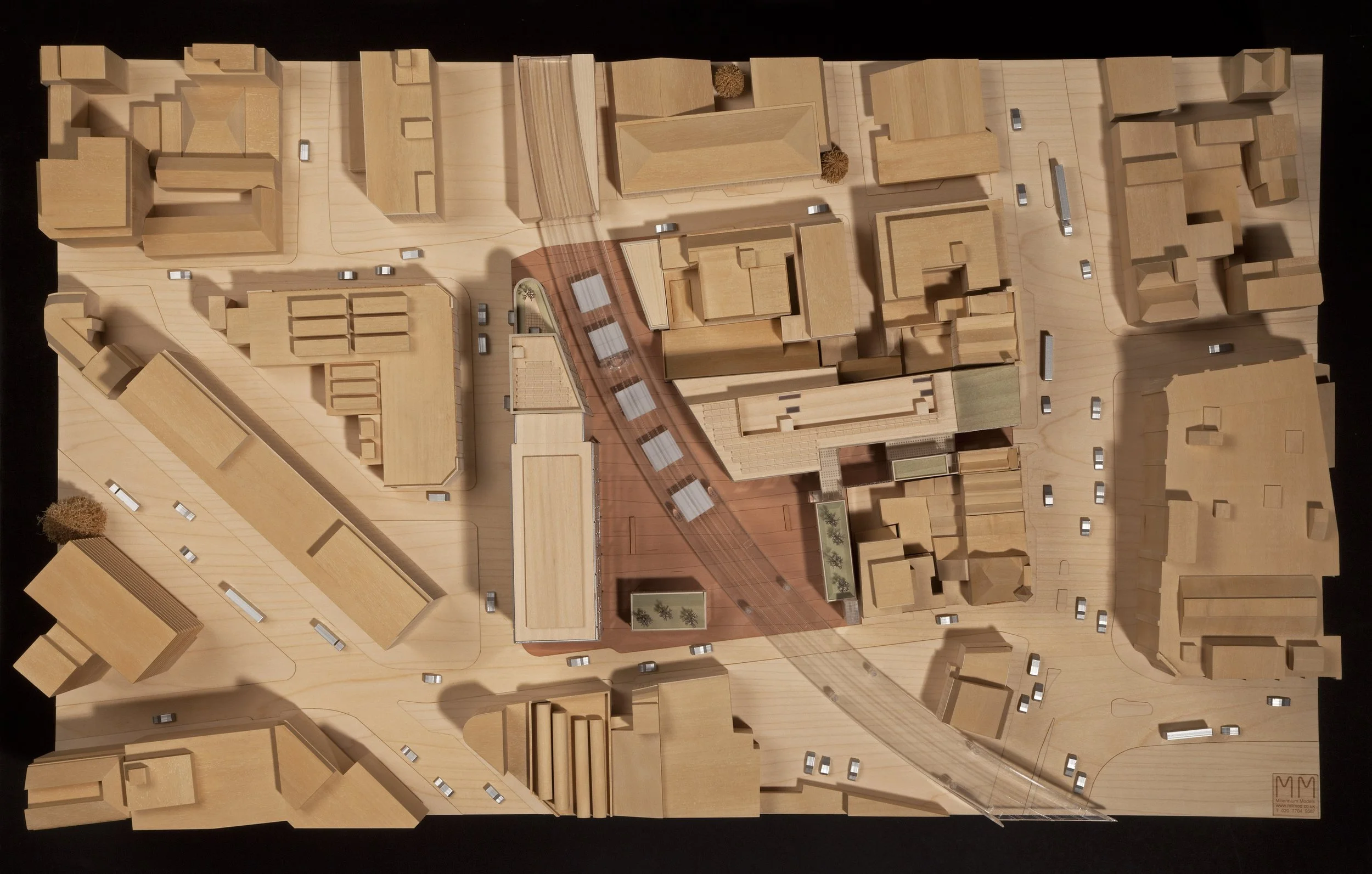
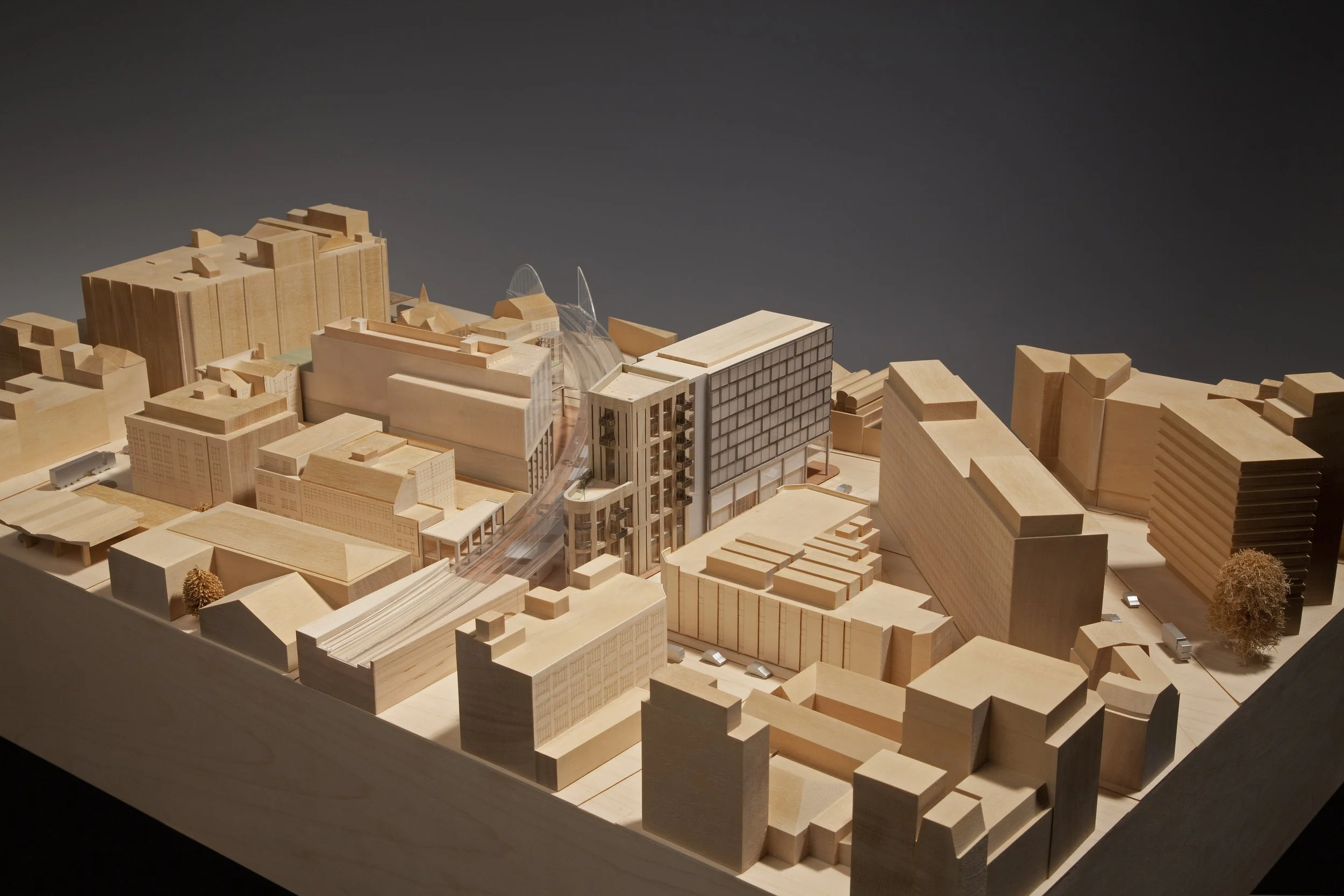
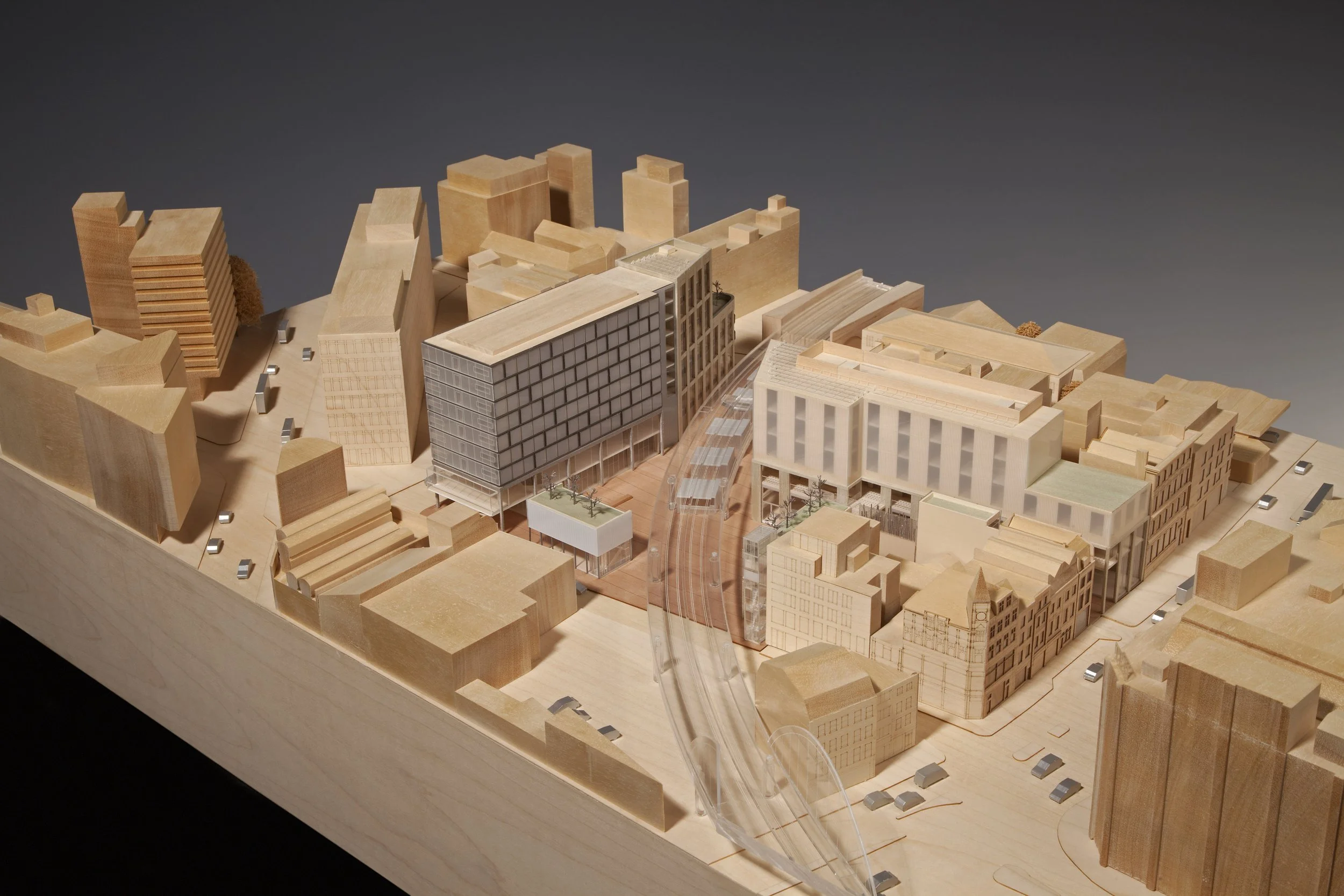
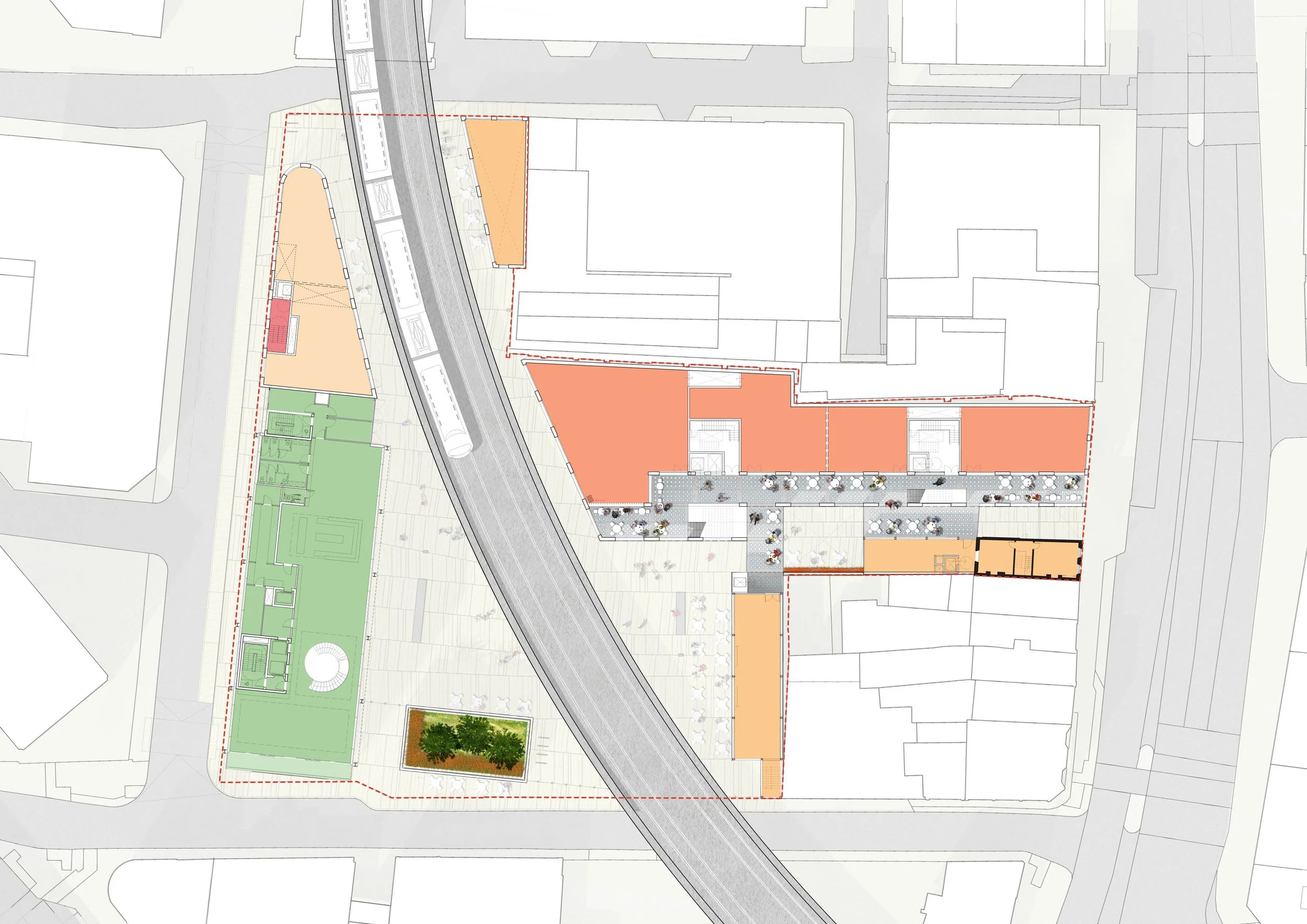
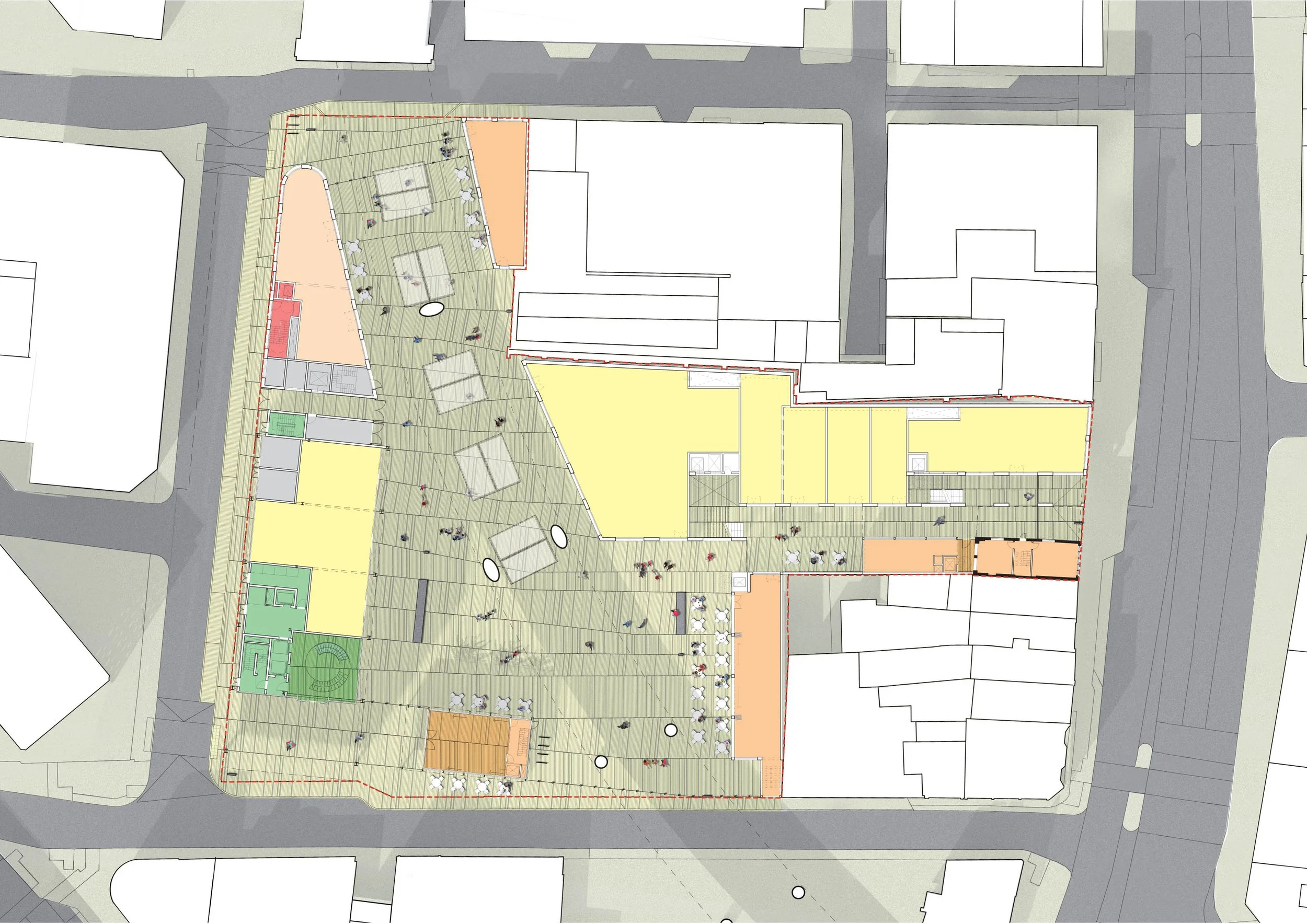
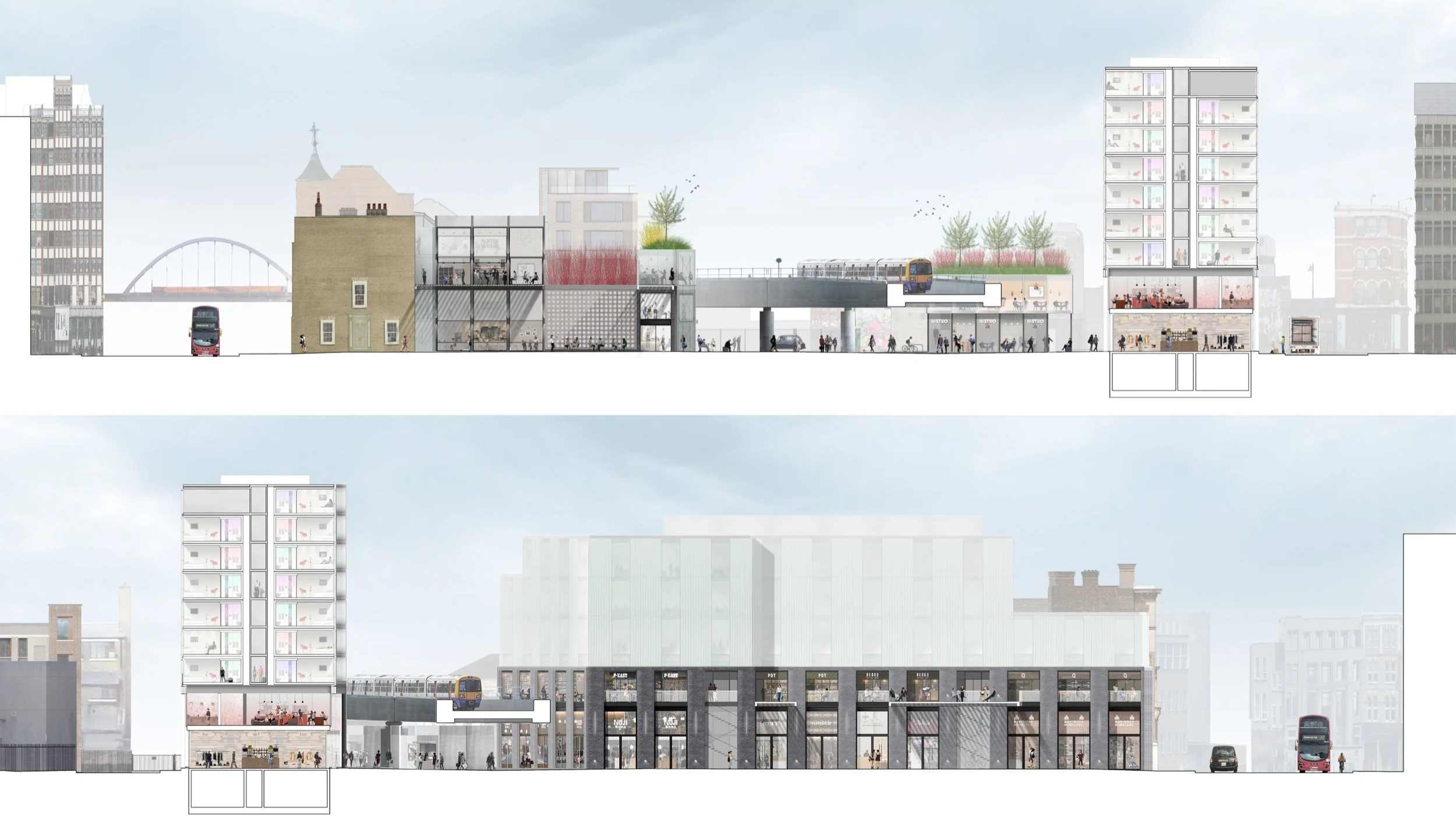
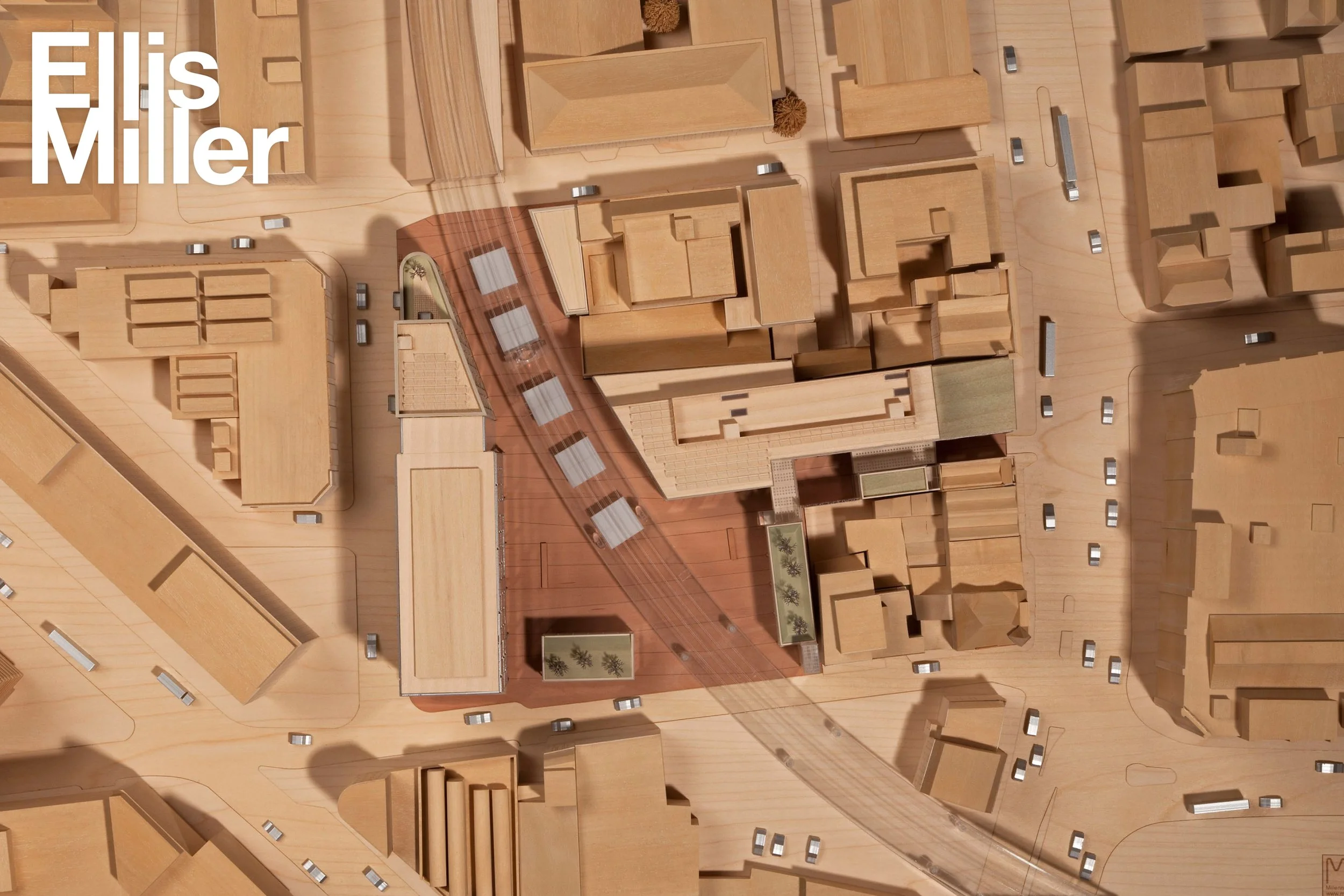
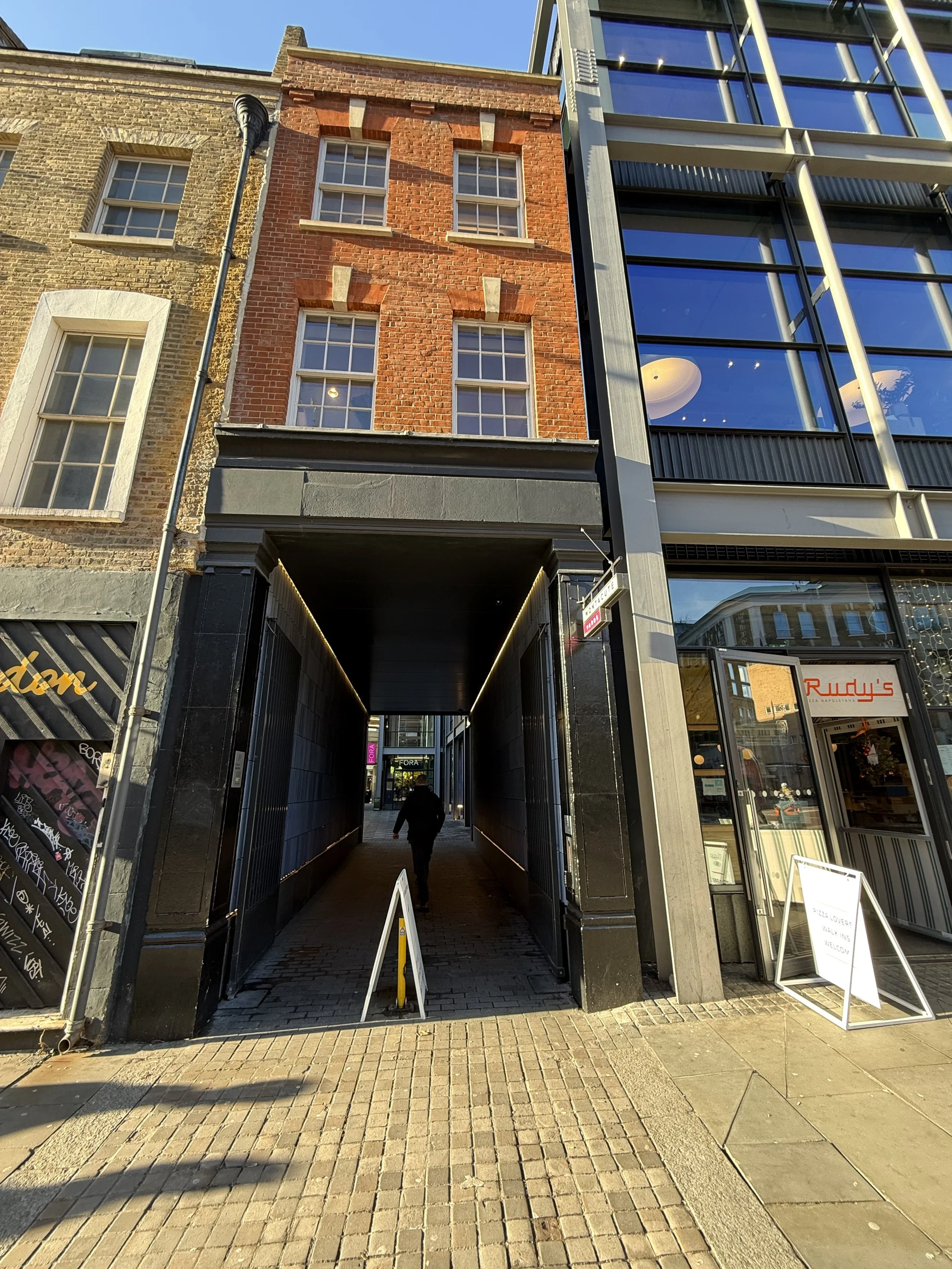
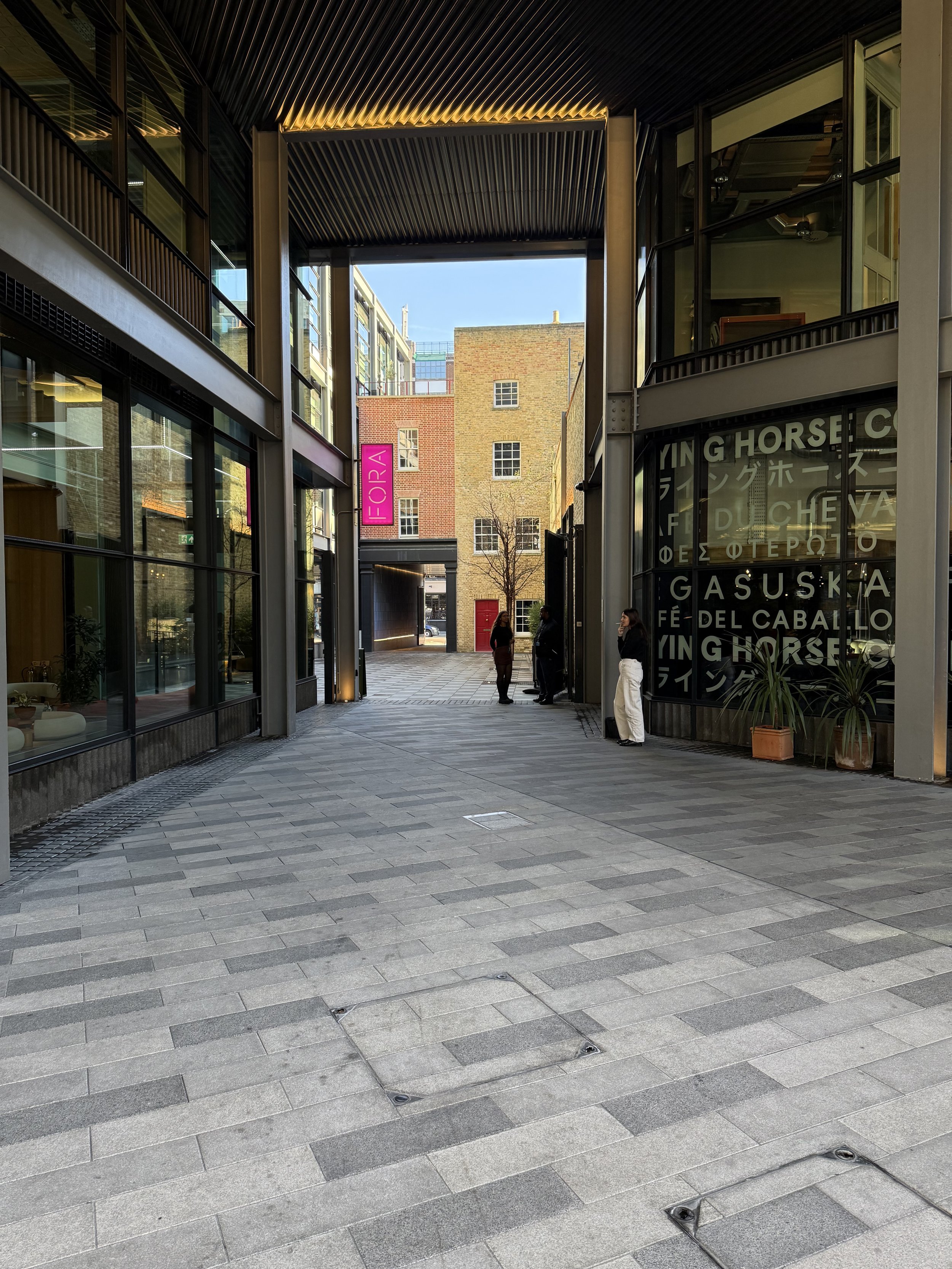
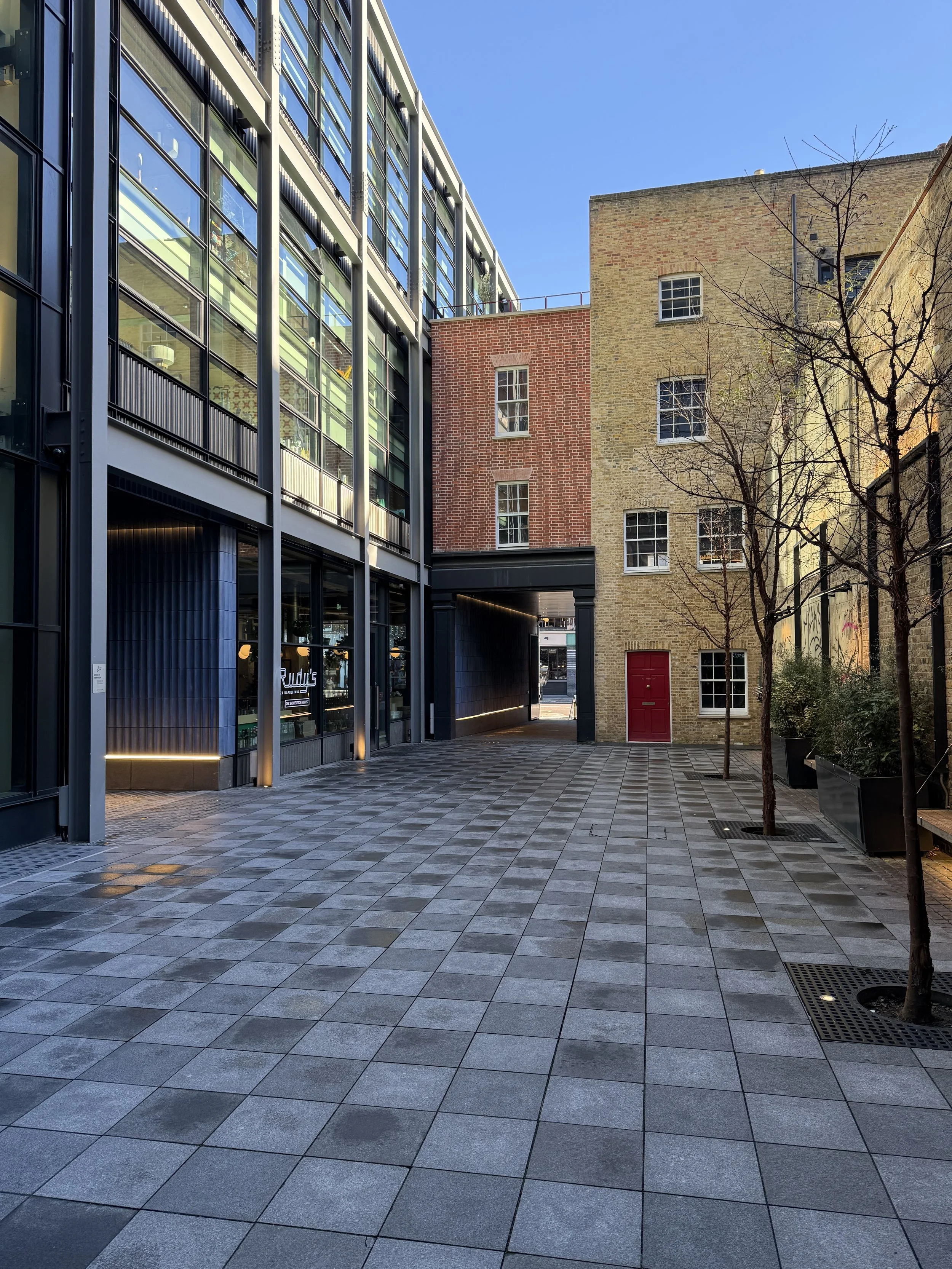
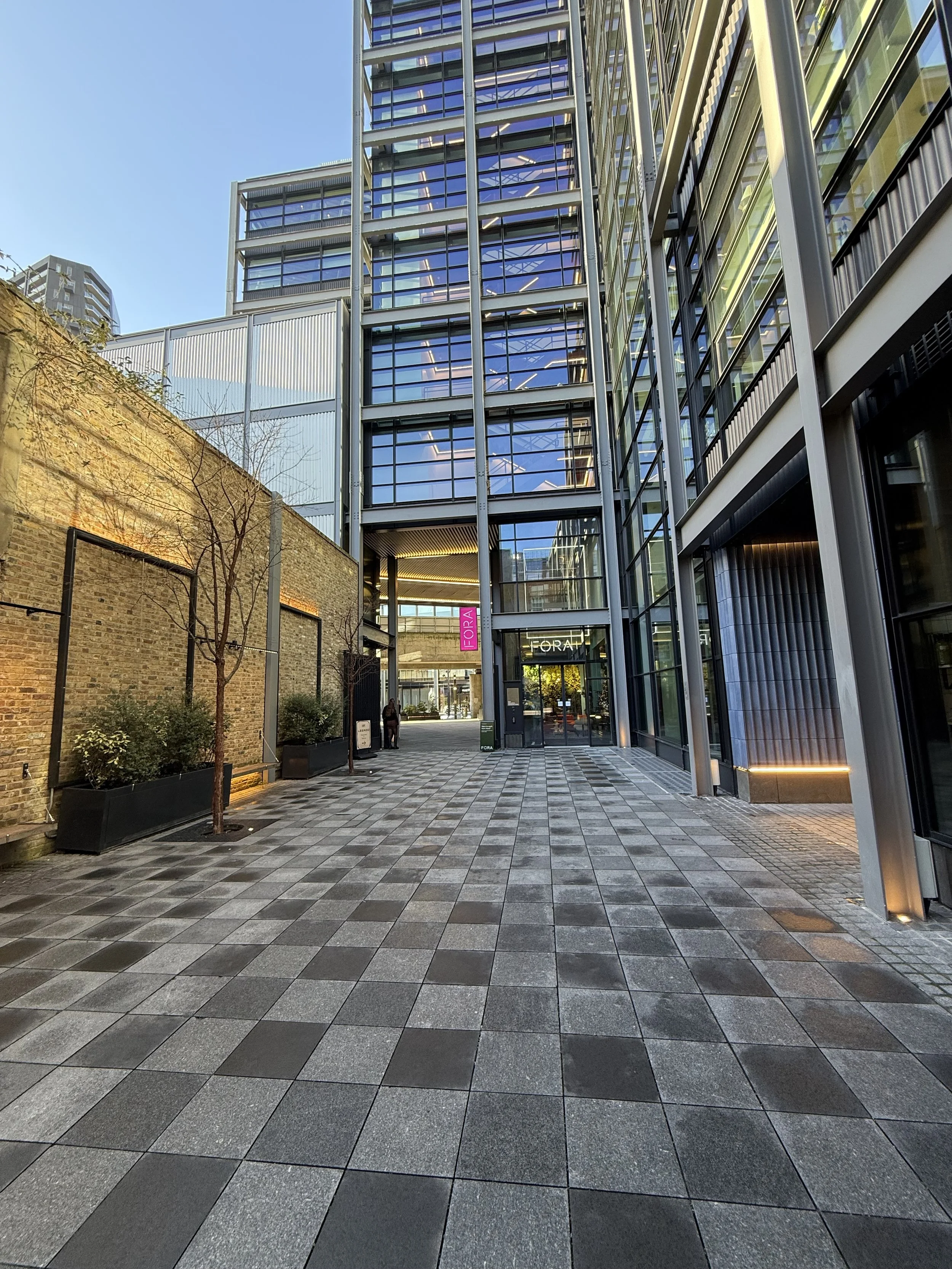
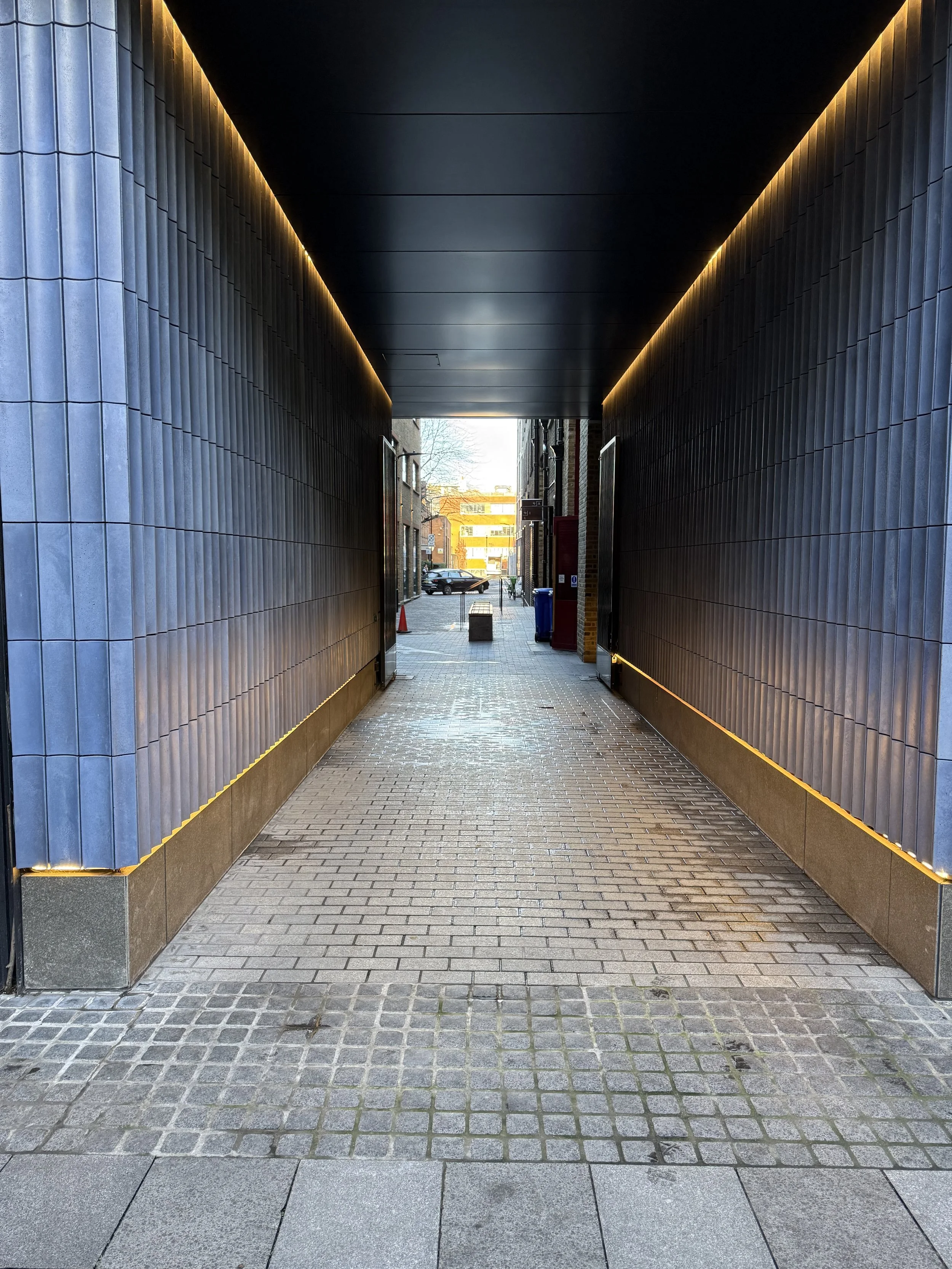
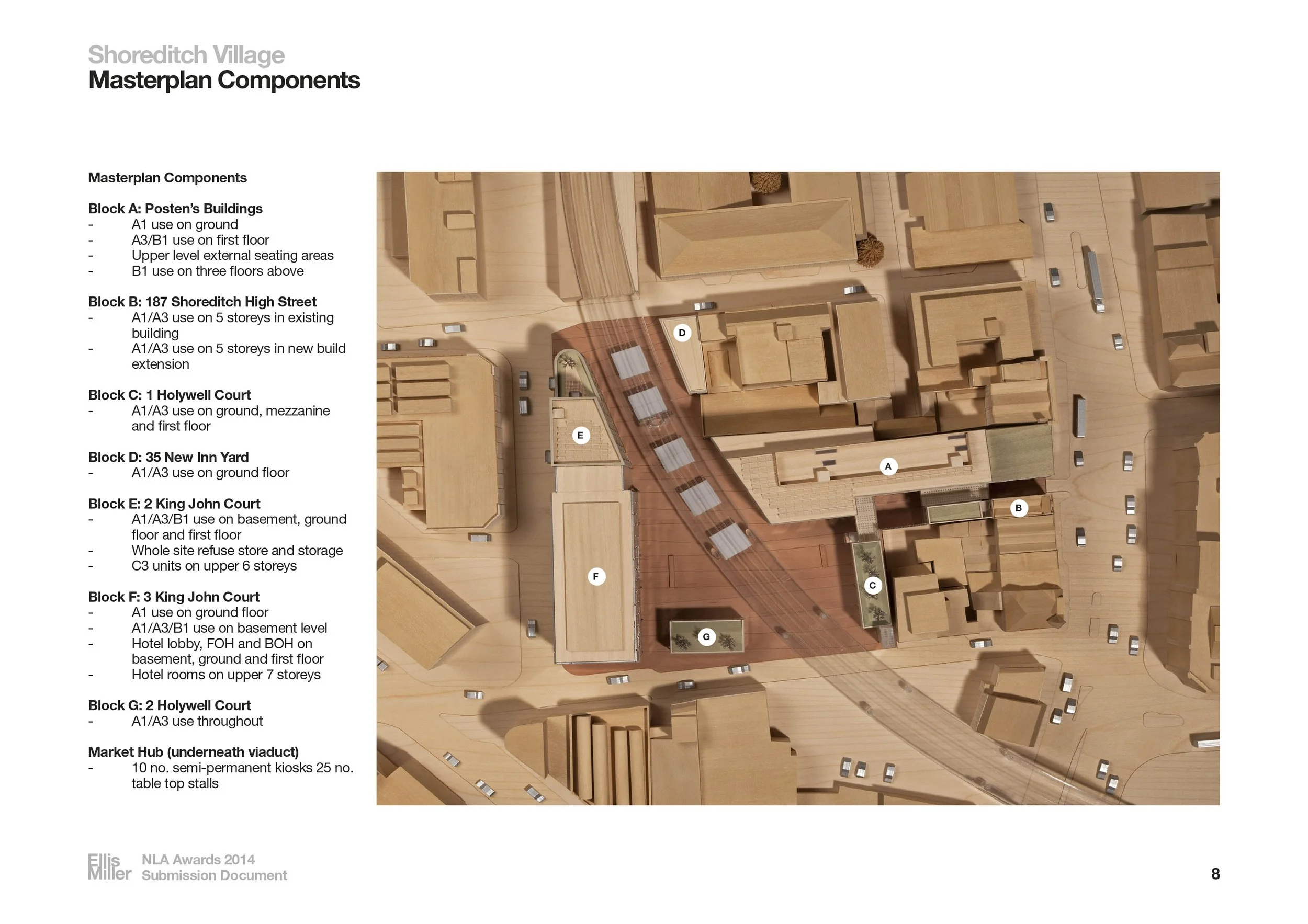
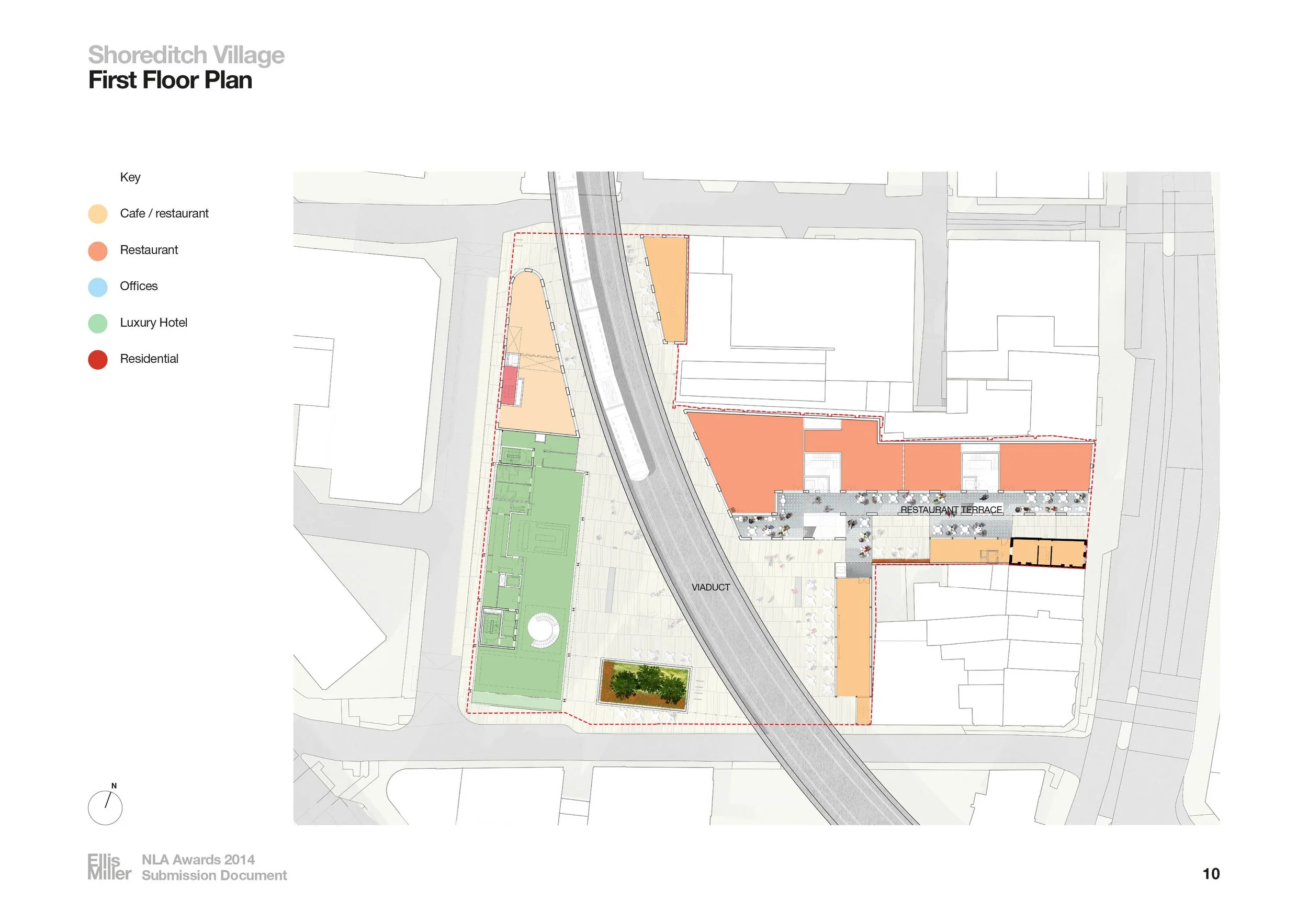
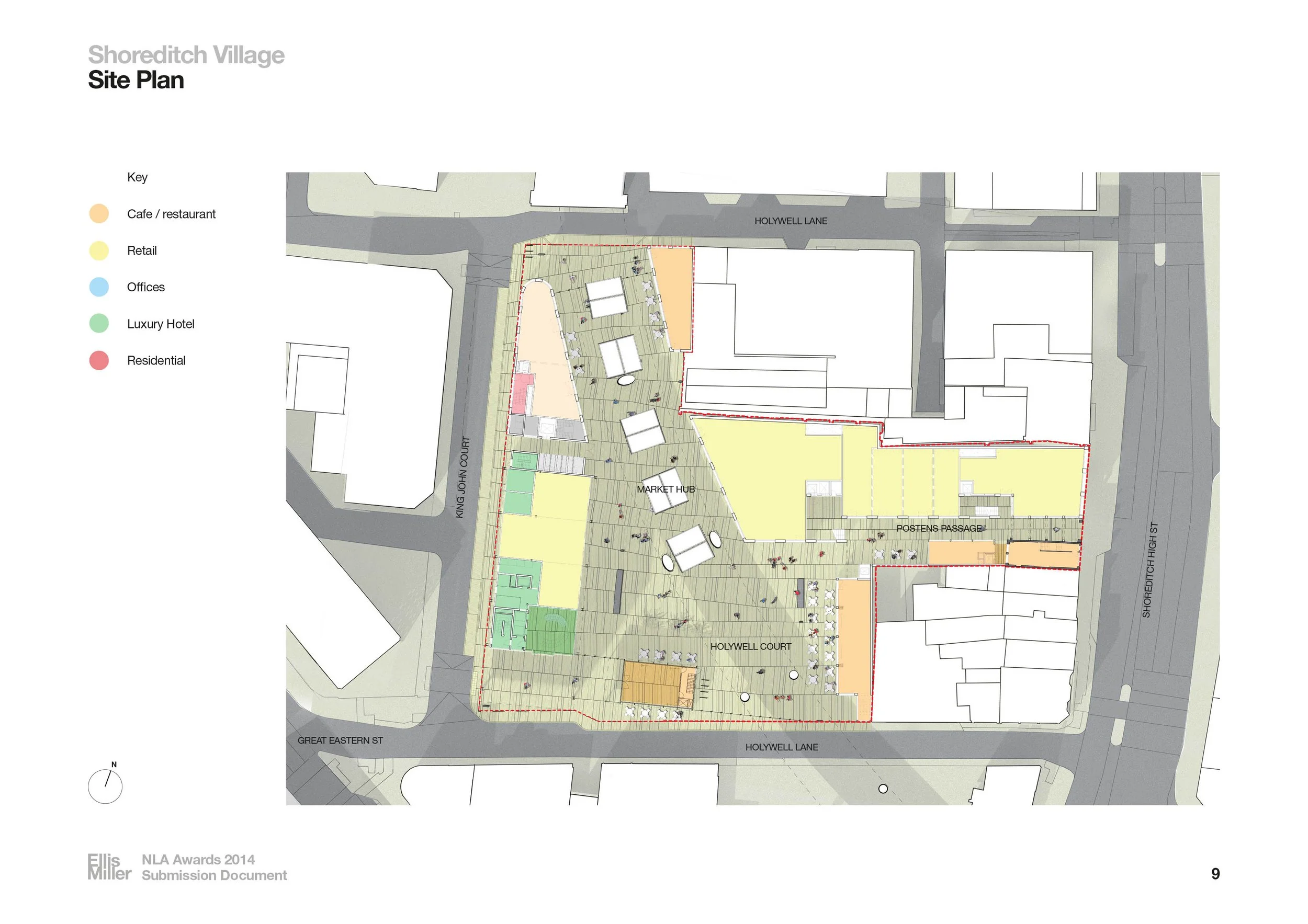
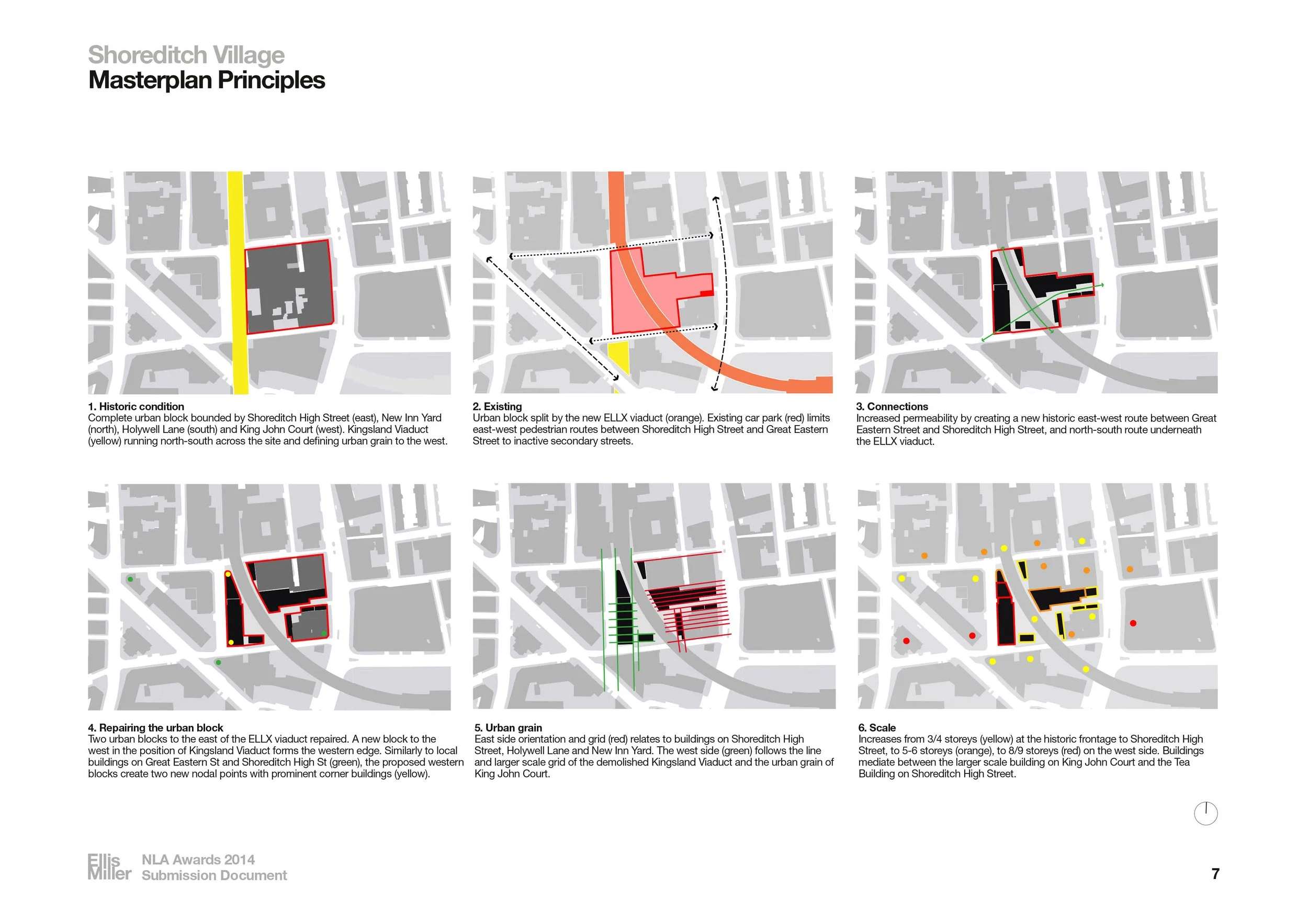
Ellis-Miller + Partners led the groundbreaking Shoreditch Village masterplan from 2011 to 2024, showcasing their mastery in urban regeneration by redeveloping a 14,000 sqm derelict site in London’s East End into a dynamic mixed-use neighbourhood. Their innovative framework, integrating historic street patterns, re-east list routes east to west across the site that had been disrupted by the construction of the new TFL East London Line. A series of interlinking south facing courtyards were created, each having a different scale, bounded by active ground-floor frontages and creative repurposing of railway structures, tackled extraordinary planning and construction challenges, resulting in a unified urban tapestry that honours Shoreditch’s industrial legacy while fostering contemporary community life.
Ellis-Miller + Partners pivotal contributions included orchestrating a comprehensive masterplan, obtaining detailed planning consent for phases 1 and 2 and listed building consents and co-ordination of a diverse team of designers. The valuable consents granted addressed the site’s fragmentation beneath the newly operational East London Line viaduct, contending with multiple landowners, conservation area stipulations, Grade II-listed Georgian townhouses, Victorian arches, and entrenched historic rights-of-way. Planning complexities involved protracted negotiations with Hackney Council for 2013 approvals, incorporating archaeological assessments and community consultations to resolve potential disputes over permeability and heritage impacts. Construction obstacles encompassed engineering solutions for train-induced vibrations, phased sequencing to limit local disruption, and adaptations for Brexit-related supply delays and the 2020 pandemic, which pushed Montacute Yards’ completion to 2023. Their adaptive design ethos transformed these hurdles into assets, such as elevating the Braithwaite Viaduct into London’s inaugural linear park. The area has tranfromed from a disused wasteland into a vibrant part of the fabric of the creative East of London. It was the initial vision by Ellis-Miller + Partners that allowed this transformation to occur.
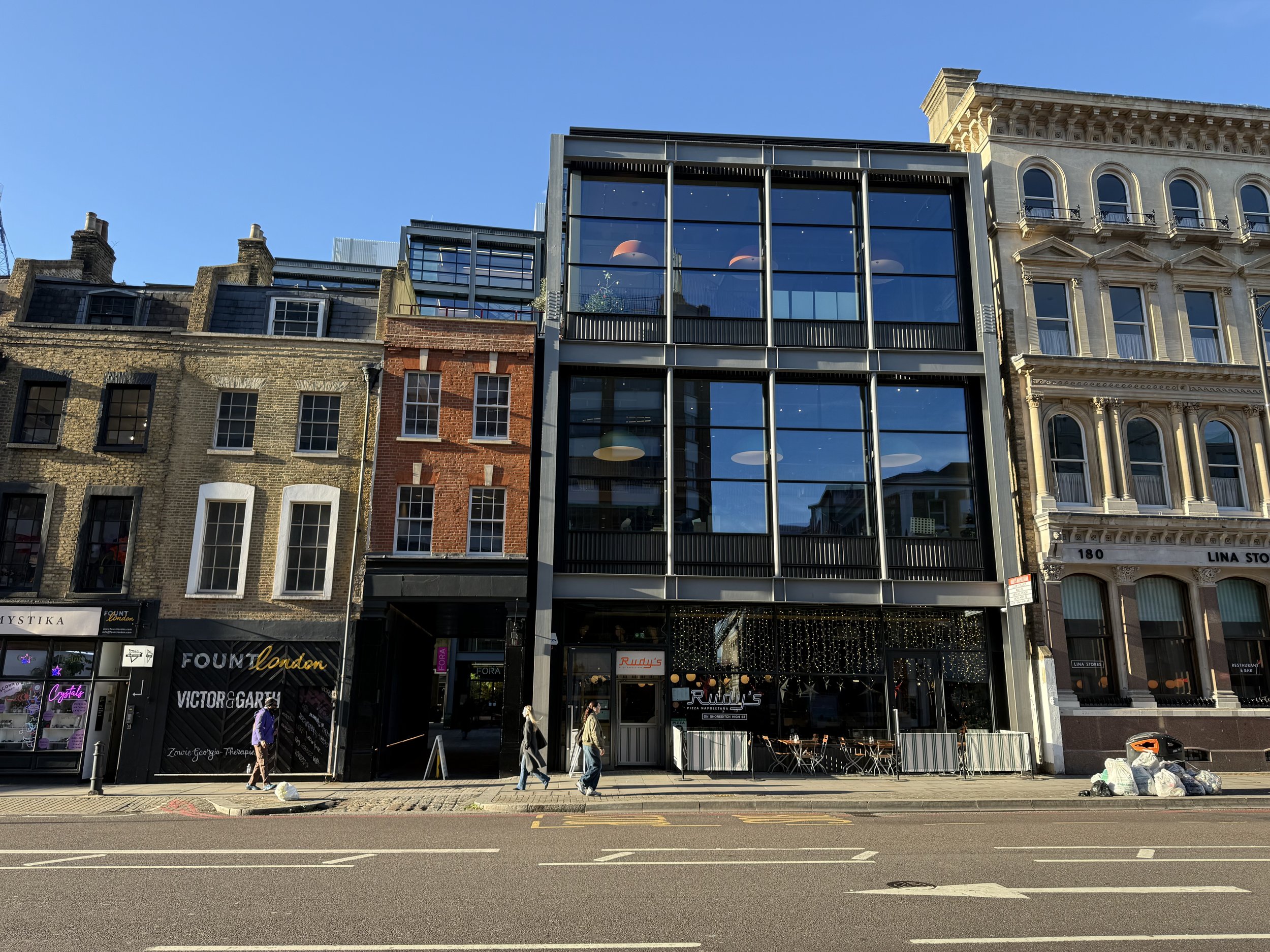
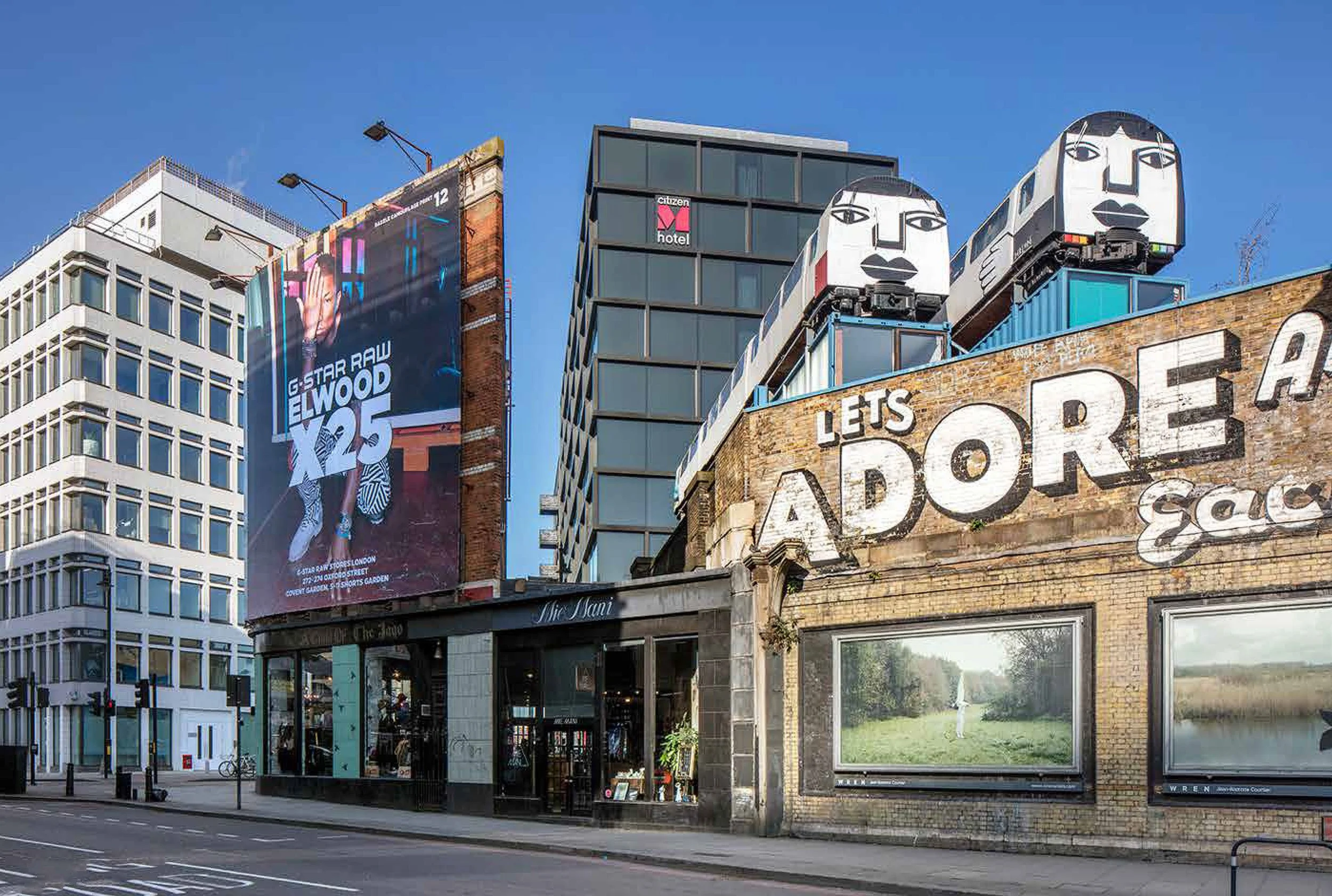
Collaborative efforts were instrumental in realising this vision. In Phase 1, under developer Workhan’s guidance for family trusts, Ellis-Miller + Partners teamed with Amsterdam’s Concrete on the citizenM hotel, integrating modular construction with site-specific heritage cues; Julian Harrap Architects meticulously restored listed buildings along Shoreditch High Street, including Georgian townhouses; and Gustafson, Porter + Bowman crafted sustainable landscapes, embedding biodiversity features and urban heat mitigation in courtyards and green spaces. For Phase 2, Montacute Yards—acquired by Brockton Capital in 2016—Ellis-Miller + Partners detailed planning consent was developed by AHMM with two warehouse-style office buildings featuring steel exoskeletons and a cross-laminated timber (CLT) pavilion, spanning 9,290 sqm with tiered roof terraces and a revived historic passageway. Stakeholders such as Derwent London offered investment expertise, while Hackney Council and Transport for London (TfL) ensured alignment with infrastructure and sustainability standards, including 10% affordable workspace provisions.
From multifaceted perspectives, Ellis-Miller Partenrs leadershippromoted equitable development, engaging local stakeholders to counter gentrification risks. They balanced commercial viability with public amenities, like the makers’ market. Implications include substantial economic uplift, aligning with Hackney’s 2026 FutureShoreditch framework. Awards like multiple RIBA London and New London honours underscore this collaborative triumph, establishing Shoreditch Village as a paradigm for regenerating constrained urban sites in London’s creative districts.