St George’s Church
Kew/ Residential Conversion West London
RIBA Commendation
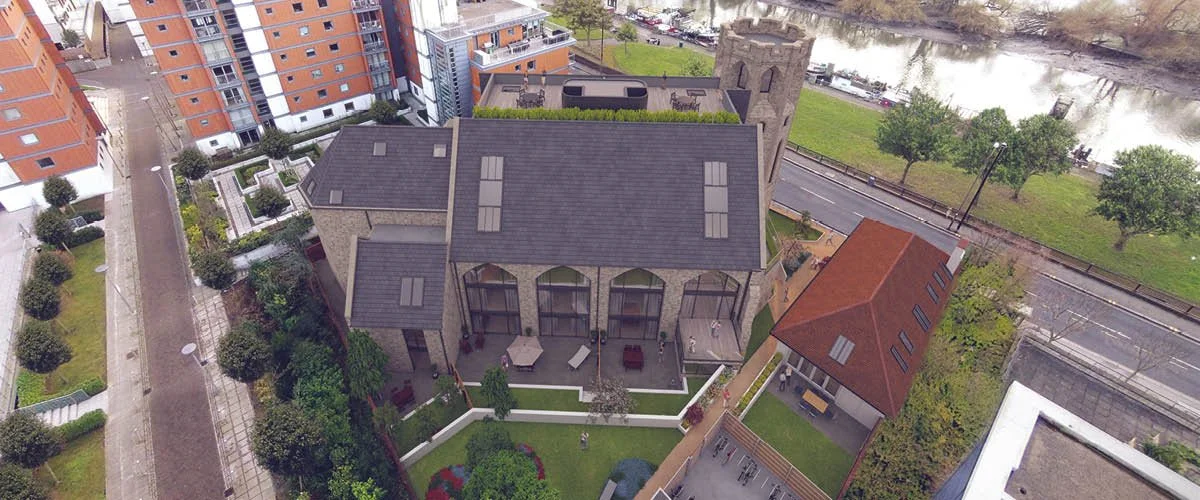
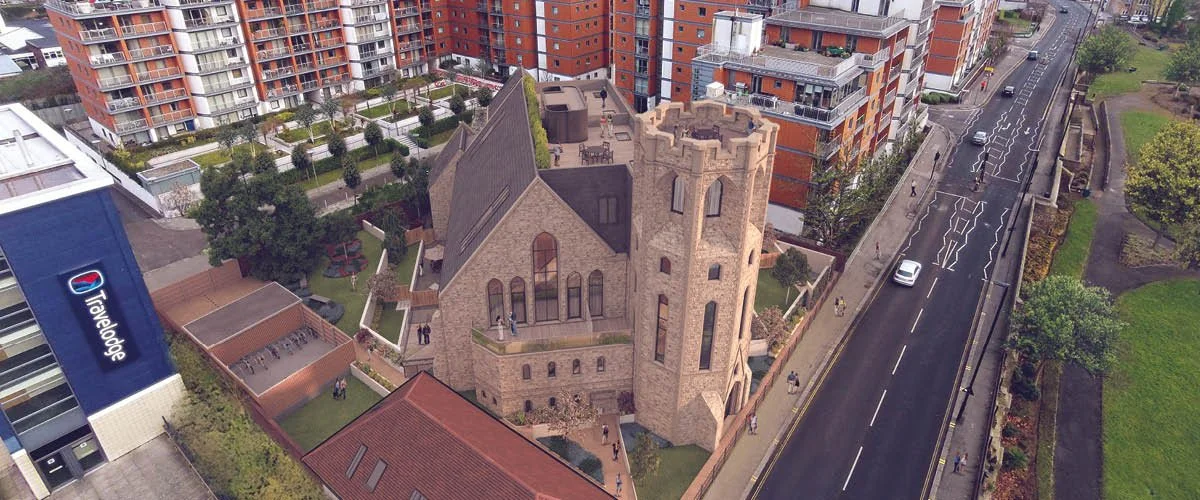
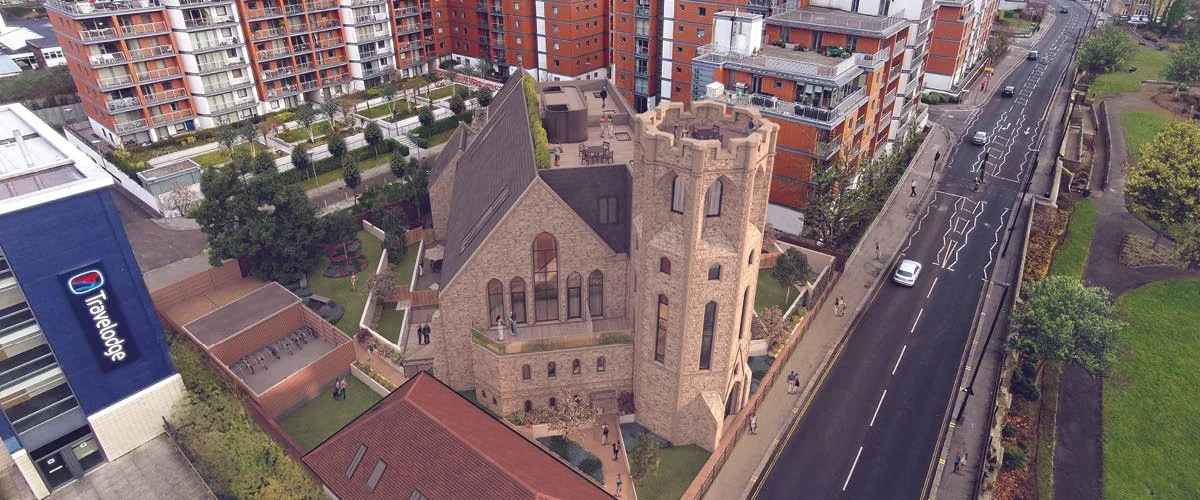
St George’s Church, a locally listed building completed in 1887 to designs by local architect A. W. Blom, occupies a prominent riverside site in Kew, close to the Royal Botanic Gardens. Built to serve the expanding local community, it replaced an earlier 1762 structure and remained in active use until its abandonment in 1959 due to declining congregation numbers. From 1988 until 2008, the church housed the Musical Museum, a specialist collection of mechanical instruments that drew enthusiasts from across the world, before the collection relocated and the building fell into redundancy once more. IDM acquired the property in 2011 and Ellis-Miller + Partners gained consent in 2012.
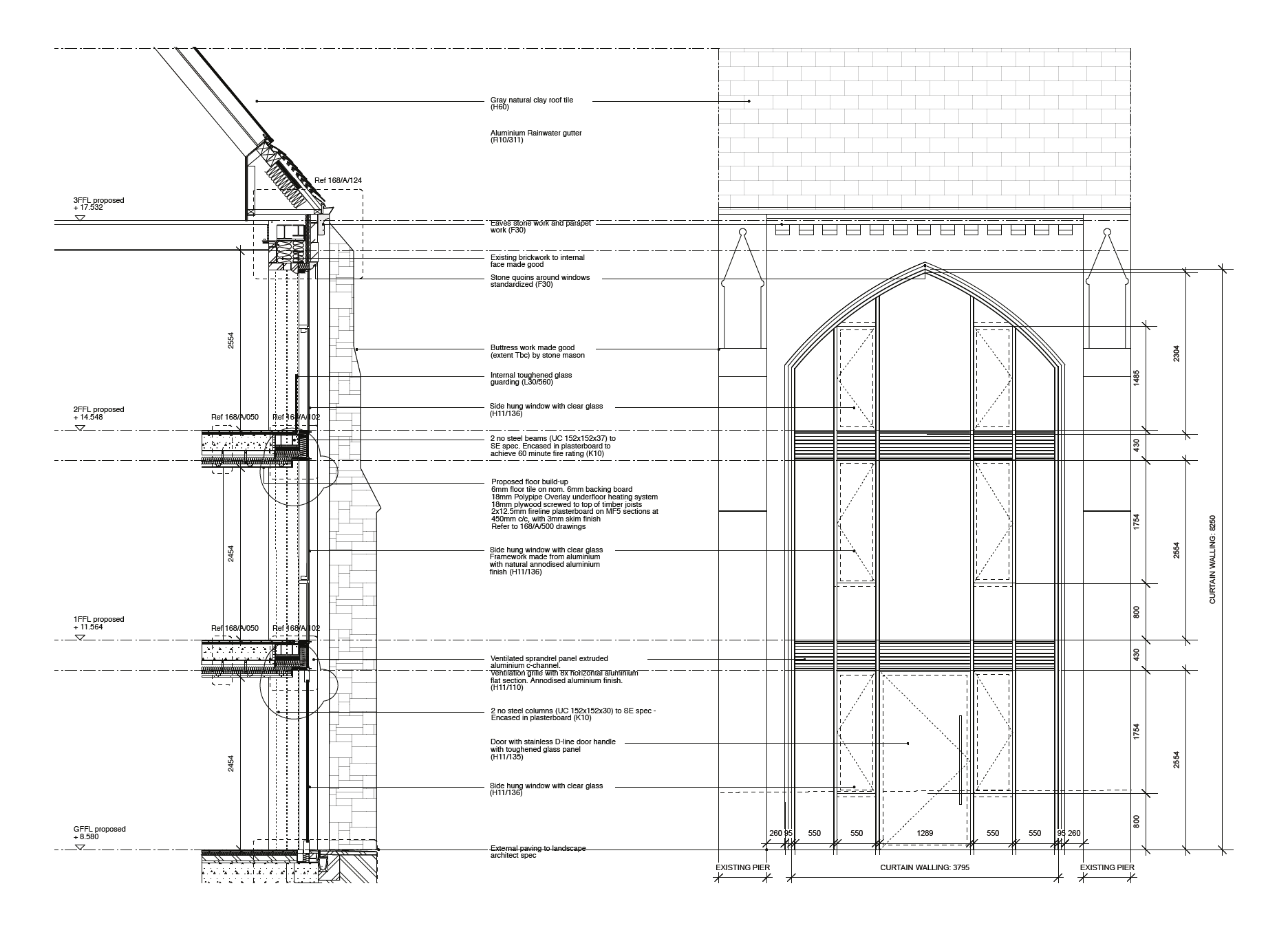
The conversion project, undertaken by IDM Properties, addressed profound structural and conservation challenges inherent to a late-Victorian brick-built edifice with slender foundations and a lightweight timber roof. The original design, optimised for ecclesiastical rather than residential loading, demanded rigorous engineering analysis to accommodate modern habitation without compromising stability or heritage fabric. In close partnership with Ellis-Miller + Partners and structural engineers Webb Yates Engineers — the same multidisciplinary team that engineered the acclaimed lightweight rooftop addition at the Hoover Building — IDM implemented a suite of innovative, low-impact interventions.
Central to the scheme was the insertion of a new attic storey utilising cross-laminated timber (CLT) panels and glulam beams, which restricted additional dead load to under 0.8 kN/m². This approach negated the need for extensive foundation underpinning, a cost-prohibitive measure on the constrained Thames-side plot. The attic level recedes behind augmented parapets, preserving the church’s original roofline and copper-clad fleche when viewed from the adjacent path or river. Detailed load-path modelling ensured that new mezzanine floors within the 12-metre nave volume — suspended via slender steel hangers from the existing hammerbeam trusses — imposed minimal stress on the historic floor slabs.
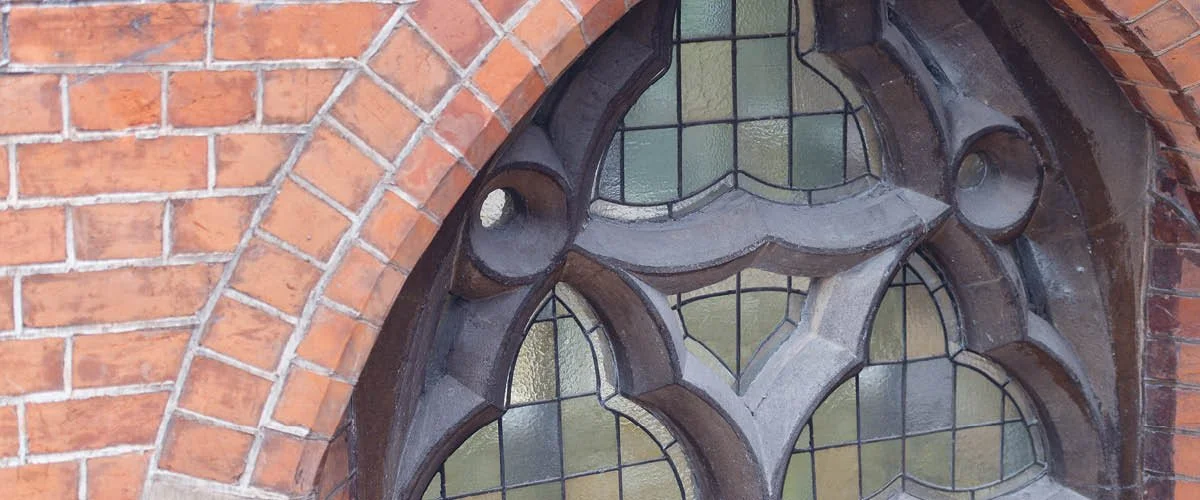
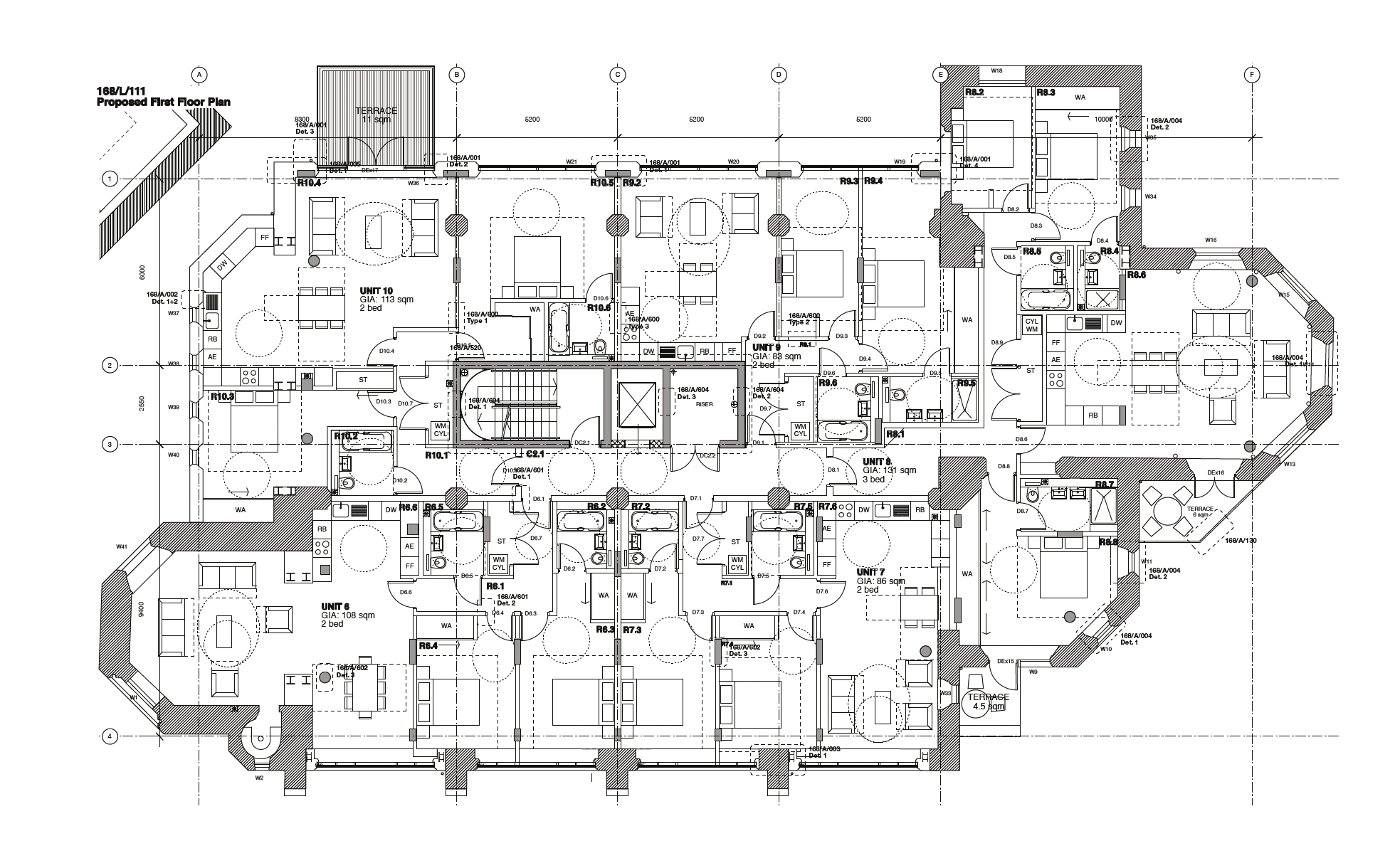
The nave accommodates two double-height apartments, where restored lancet windows and exposed brickwork channel natural light into voluminous living spaces, complemented by repaired Portland stone arcades and rib-vaulted ceilings. Four duplex units occupy the transepts and side chapels, each with independent accesses and gardens reclaimed from the former churchyard. The chancel forms a singular principal residence, framing Lawrence Lee’s abstract east window as a focal point, with the sanctuary platform repurposed as a secluded terrace.
Ancillary spaces include a residents’ gymnasium in the refurbished crypt and secure undercroft parking. Landscape architect Todd Longstaffe-Gowan’s designs restore river vistas and enhance biodiversity linkages along the Thames Path.
Completed in spring 2014 following a meticulous three-year programme, the project earned a commendation from the Royal Institute of British Architects and the Georgian Group Architectural Award for exemplary new work in a historic setting. St George’s Church exemplifies how collaborative engineering and architectural precision can revitalise vulnerable 19th-century structures, ensuring their enduring contribution to Kew’s cultural landscape.
Client: IDM Properties