Future World House
(Stuart House) Kent’s Hill
Milton Keynes
Client:
Energy Saving Trust /
Milton Keynes Energy Park
RIBA Regional Award
BBC Tomorrow’s World flagship project
Proto-Code for Sustainable
Homes Level 6
Direct influence on the 2006 Code
for Sustainable Homes and
UK zero-carbon policy
In 1999 the average British new home was still a draughty, gas-guzzling brick box. That same year Jonathan Ellis-Miller handed over a lived-in family house that would not look outdated in 2035.
Commissioned as the public centrepiece of the Milton Keynes Energy Park, the 140 m² Future World House proved — on a standard house-builder budget — that a virtually zero-carbon home could be calm, desirable and replicable. Monitored data recorded space-heating demand below 30 kWh/m²/yr and total primary energy under 50 kWh/m²/yr using only late-1990s technology.
Key sustainable features included:
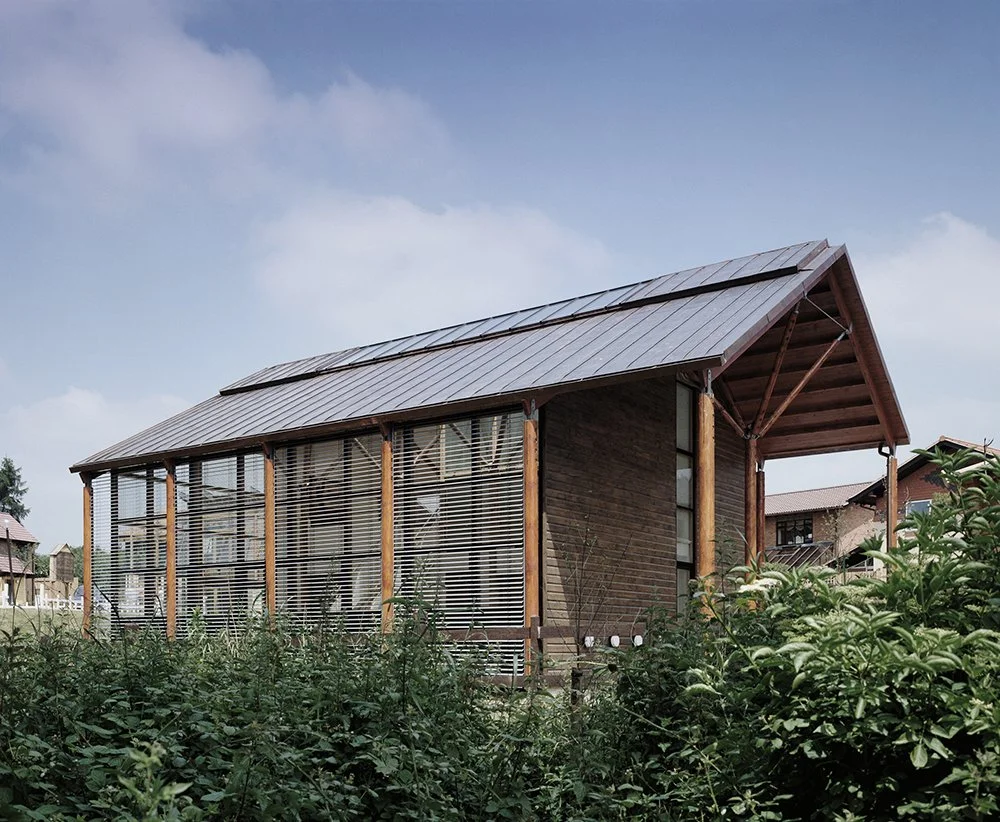
Super-insulated renewable-timber frame (U-values 0.11–0.15 W/m²K) clad entirely in silvery Douglas fir boarding that has weathered to a soft Nordic grey
4 kWp roof-integrated monocrystalline photovoltaics, flush and grid-tied
Evacuated-tube solar thermal array delivering 70 % of hot water
8,000-litre rainwater harvesting + reed-bed greywater recycling
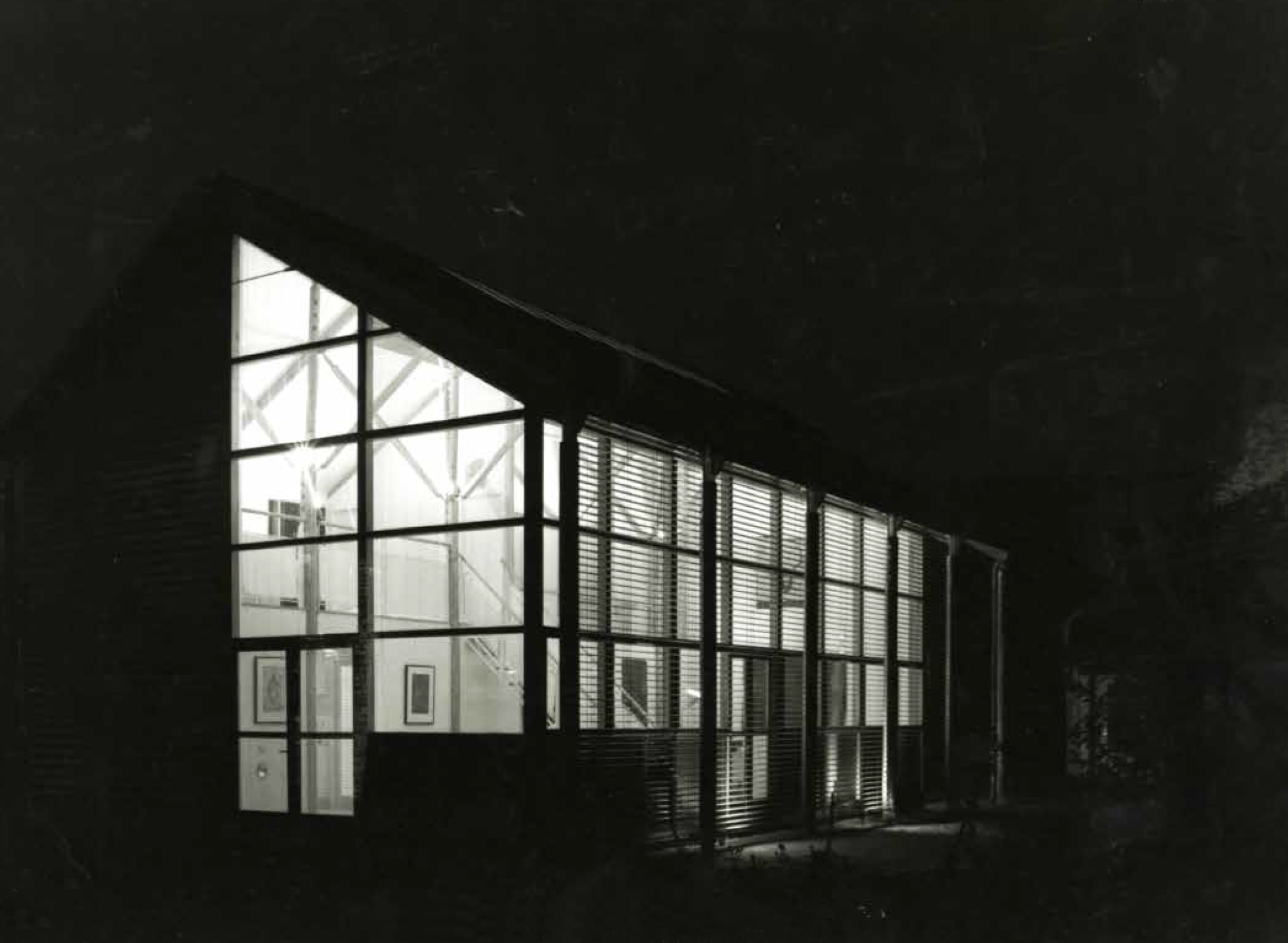
Extensive south-facing low-e double glazing controlled by full-width external brushed-aluminium external louvres on automated solar-tracking actuators — eliminating summer overheating with exquisite precision
Large polycarbonate sunspace as thermal buffer and passive pre-heater
High-thermal-mass concrete floors and Trombe-wall variant
Natural cross-ventilation with high-level automated vents
Recyclable standing-seam copper mono-pitch roof
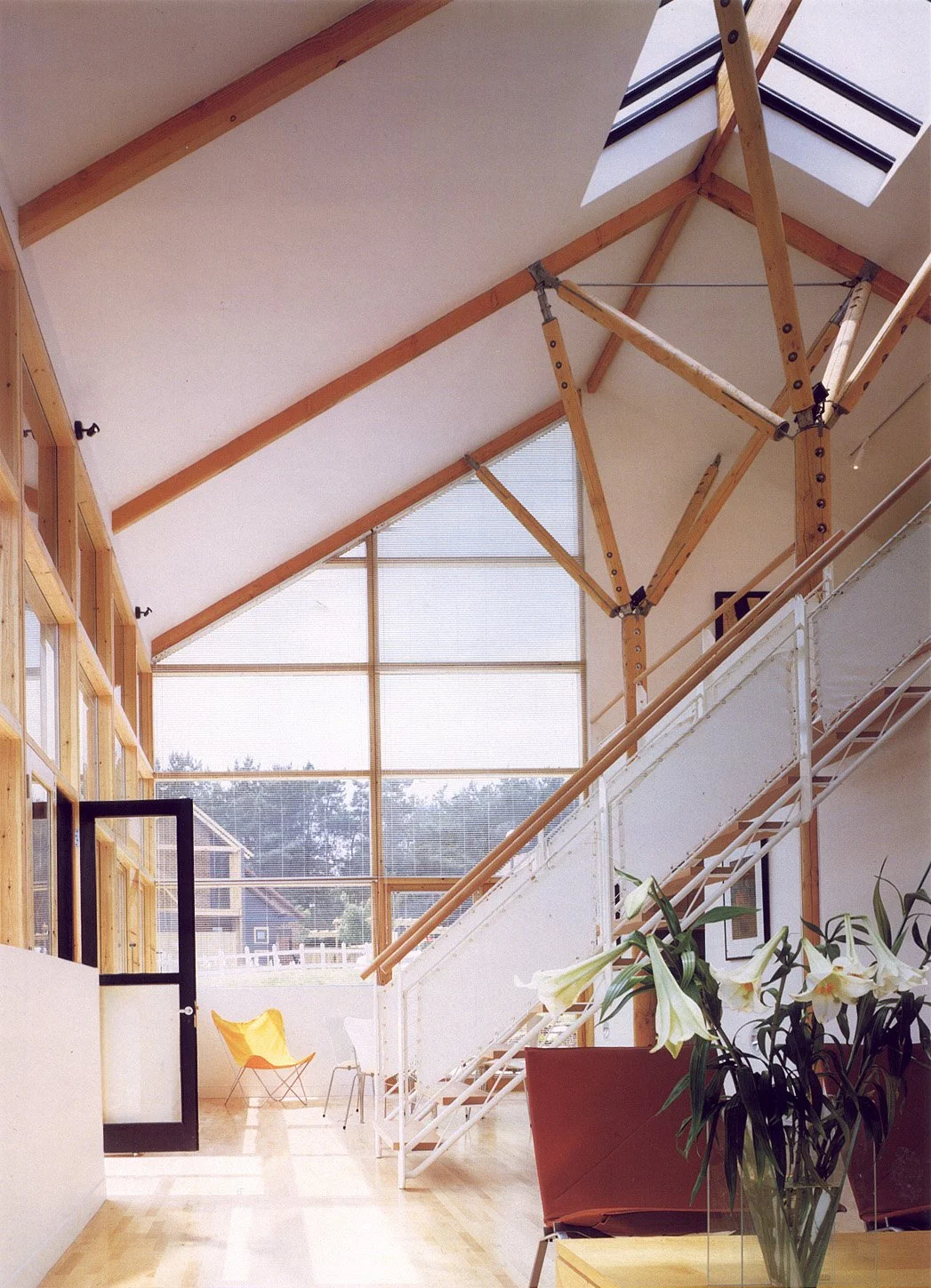
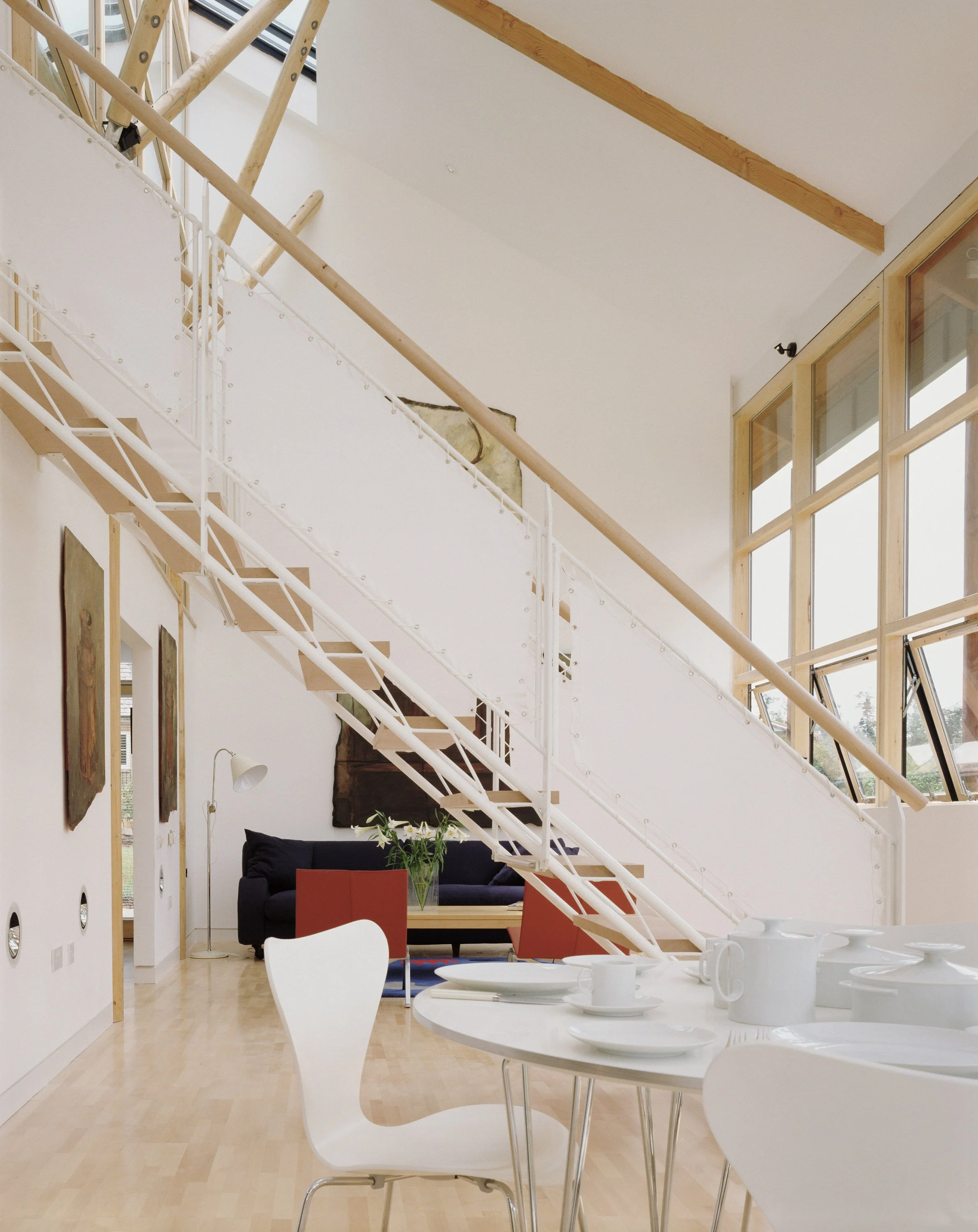
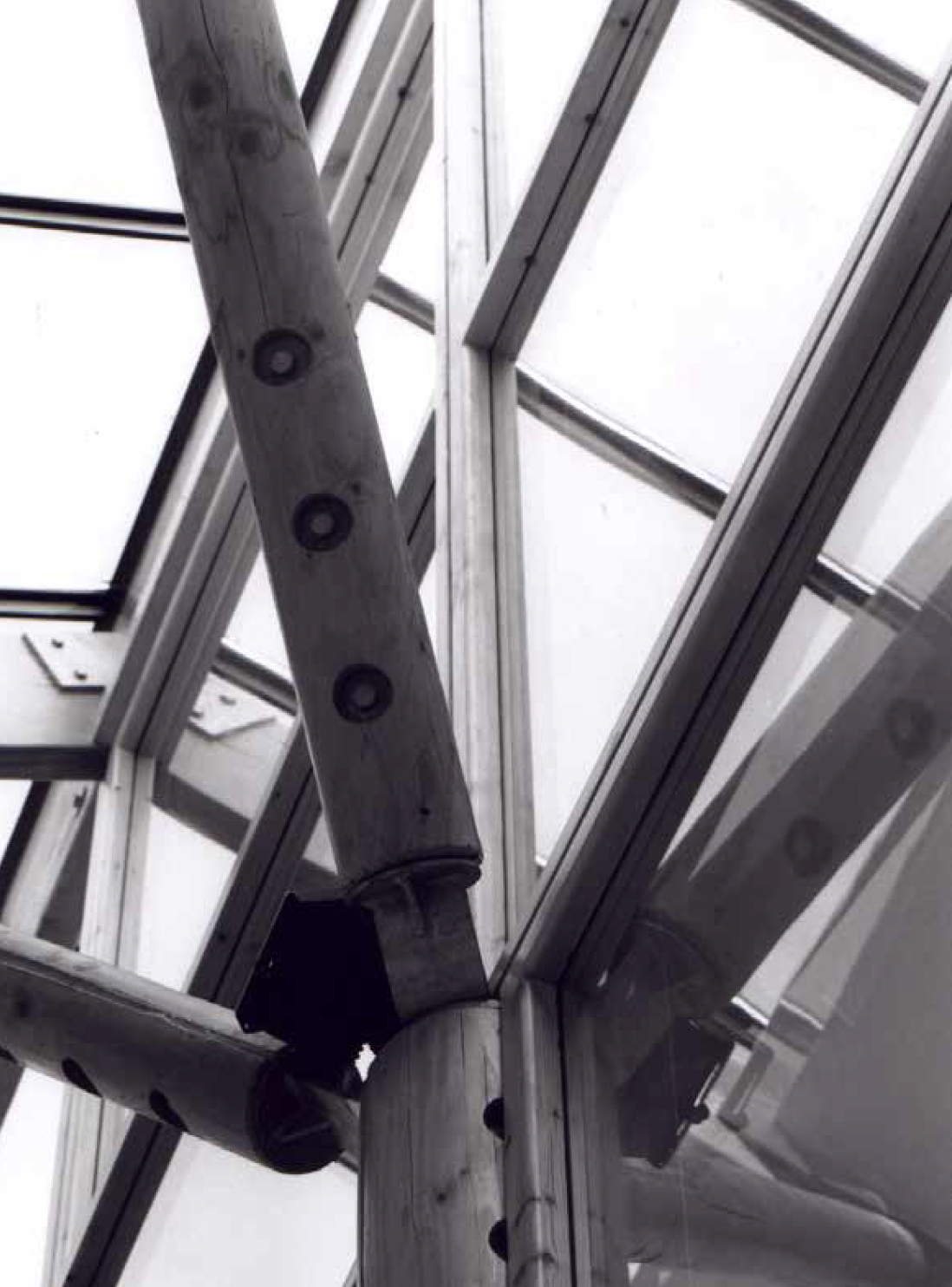
More than 40,000 visitors expected a worthy eco-experiment and found instead a serene, light-filled pavilion with exposed Douglas-fir structure inside and out, built-in joinery and effortless garden connection. The moving louvre façade and weathered fir envelope became instant icons of a new, emotionally rewarding sustainability.
The house directly informed the 2006 Code for Sustainable Homes (already performing at Level 6 equivalence), shaped BRE and Joseph Rowntree research, and gave government and volume builders an unanswerable template: net-zero and beauty were already compatible.
Twenty-six years later it remains privately occupied, still exporting electricity, still heating itself with almost no fossil fuel, its Douglas fir skin now a distinguished silver.
The Future World House did not follow the sustainability curve. It drew it — then raced a generation ahead.