
Real Tennis /
Court Tennis
Main image
Frederika Adam
Both Barry and Jonathan play the esoteric game called Real Tennis, the forerunner of most racket sports. It is a game where architecture and sport meet directly as the court is a building and impacts directly on the way the game is played. All Real tennis Courts are different, there are no standard sizes or specifications. Understanding the development of court design from the middle ages to the twenty first century is vitally important to appreciate what is a good court and what isn’t.
Choosing the correct with floor and wall materials, and also penthouse roof design are all critical areas. In the late nineteenth and early twentieth century, a builder called Joseph Bickley built various courts, which are widely recognised as the best courts. However, many of the techniques and materials used by Bickley are no longer available, which is why Barry and Jonathan understand, and have proven that certain materials today are available to build courts which have the same properties as the very best courts built over 120 years ago.
Newmarket Real
Tennis Club
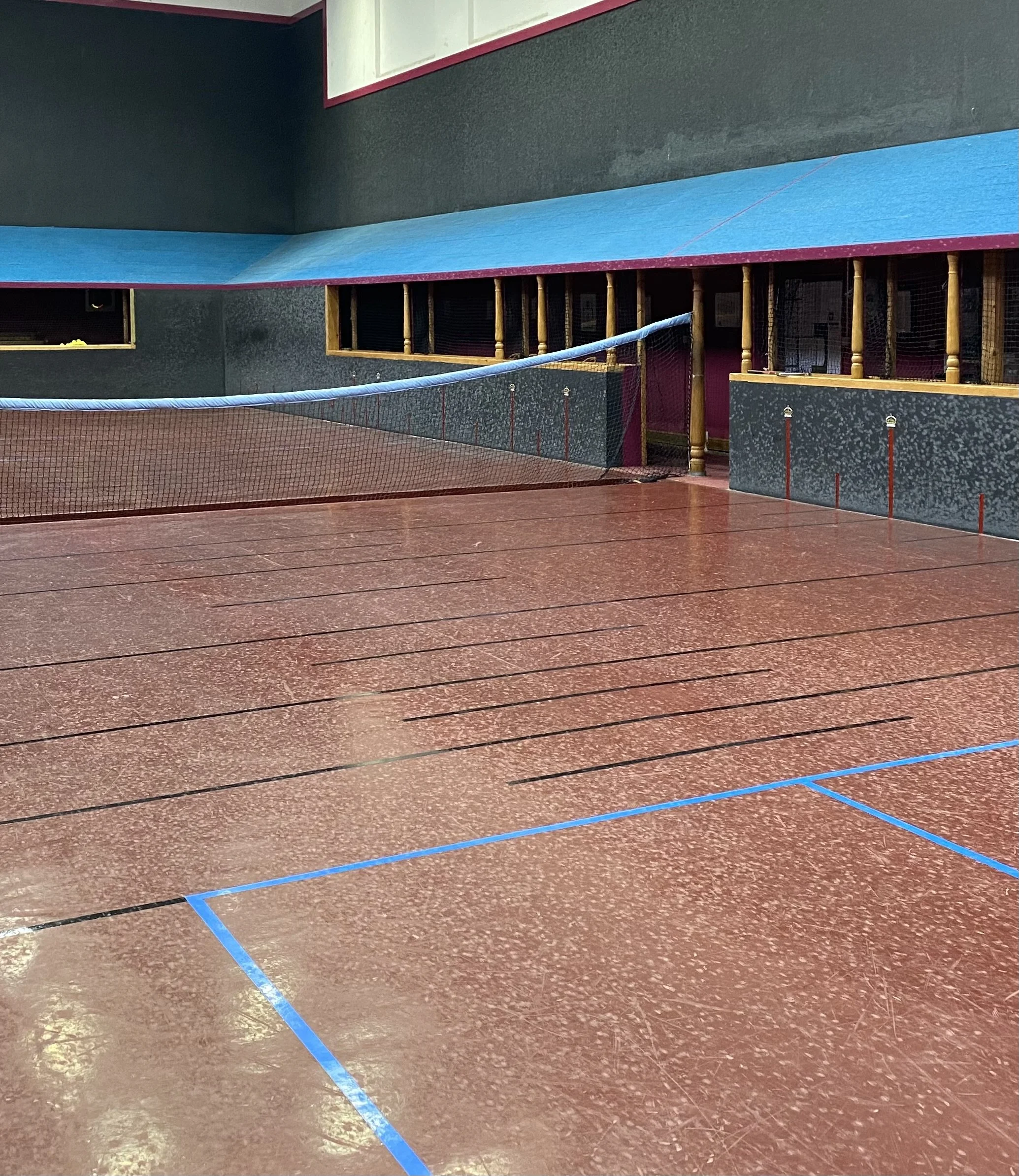
Originally built in 1901 by Joseph Bickley for £6,000, the court ceased playing real tennis in 1920, and not until 1993, did the building resume the use it was originally intended for. It had been a warehouse, a garage, and included two storey offices. Much of the Bickley floor remained although not good enough to play on. A self-coloured resin floor was used, and a special type of plaster to replicate the original hard finish. The penthouse roofs and galleries were rebuilt to an angle of 24 degrees.
The Hyde Real Tennis Court, Bridport
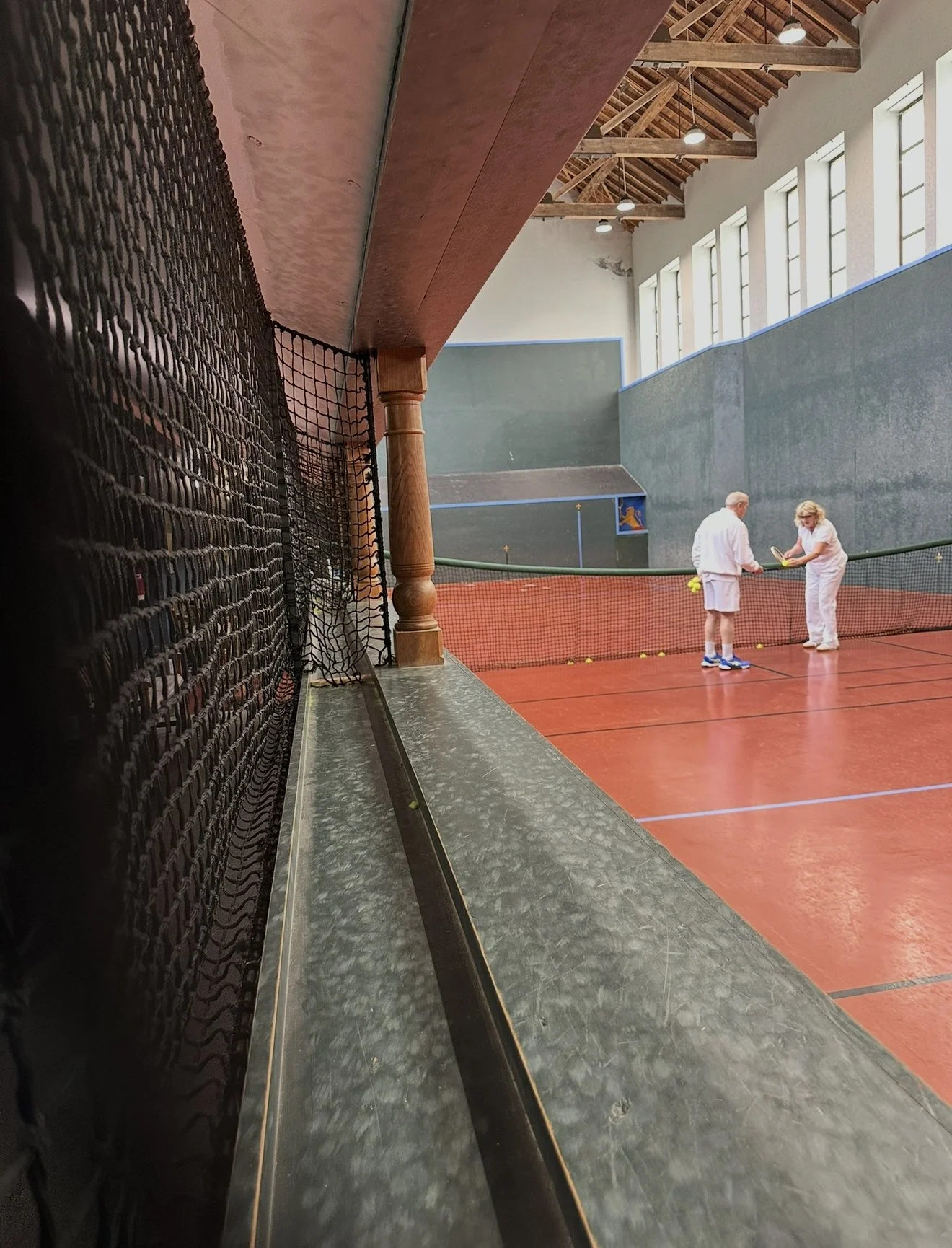
This court was built in 1884, and was built by Mr Gundry. Like the Newmarket court, it’s dimensions and materials used in it’s construction echoed the Bickley ideal with a plank penthouse roof and granulated screed floor. In World War 2, the court was requestioned by the US Army prior to “D” Day. All galleries and penthouse roofs removed and a large opening formed at the hazard end to enable army vehicles to be stored. After the war, it became a cattle shed. When the current Mr Gundry decided to re-build the court in 1998, a similar refurbishment was carried out to a similar specification to the Newmarket court.
Cambridge University
Blue Court
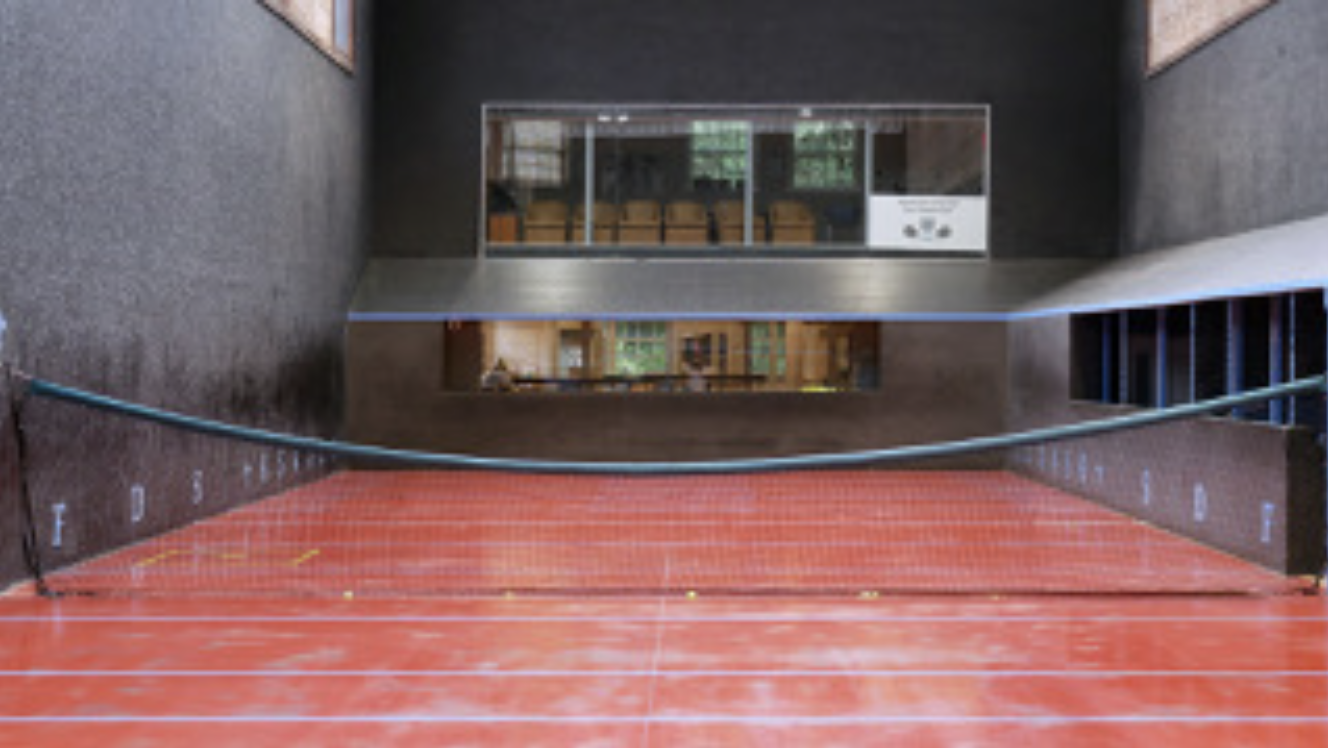
Constructed after the original Green Court in 1890, and again built by Joseph Bickley. The same construction as all his other courts, although the penthouse roof angle was 23.5 degrees rather than 22. In the 1930’s, squash courts were built inside the orginal real tennis court, and not until 1999, were the squash courts demolished and the space brought back to play real tennis again. The main wall was retained, but new galleries and penthouse roofs built using hard self-coloured plaster as the finished surface. The main feature was the viewing gallery at first floor level where a glass wall was installed to provide an amazing experience for spectators.
Canford School
Real Tennis Club
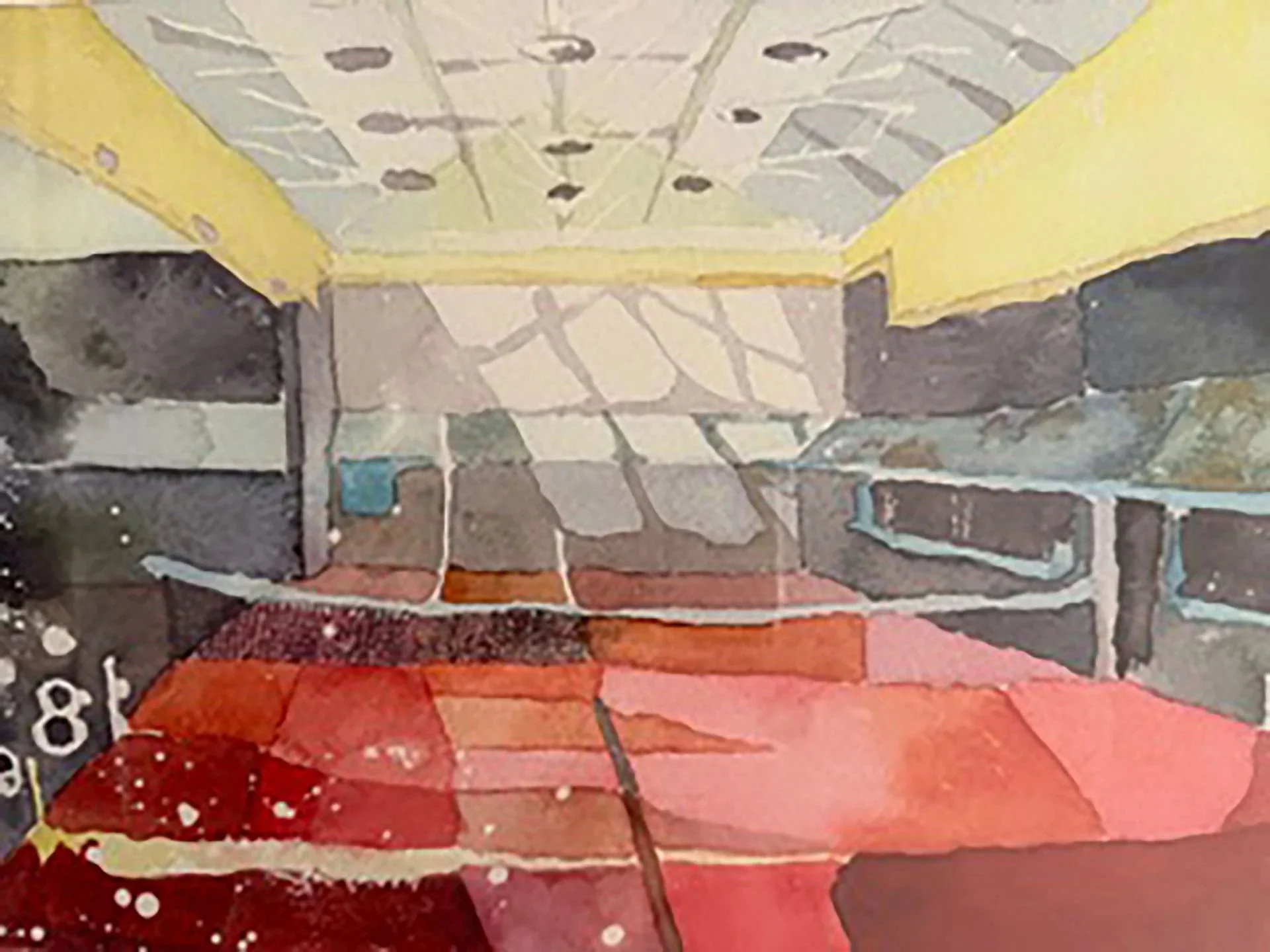
Originally built in 1879 by Lord Wimborne, the court was refurbished by Joseph Bickley in 1910, with a new floor, penthouse roofs. Apart from during the latter part of World War 2, the court has been used by the pupils at the school since 1923. The penthouse roofs were installed by Bickley to an original pitch of 24 degrees, using butt edged 2”x ½” planking on 4” x 1” joists. The underside of the penthouse roofs were sealed by tongue and groove boarding, such that the space between that and the underside of the planks was filled with sawdust. A usual Bickley specification. In 2010 Barry was asked to inspect and specify an accurate replacement of the penthouse roof coverings due to damage caused over the years. Club members say they can’t tell the difference!
Troon Real Tennis Club
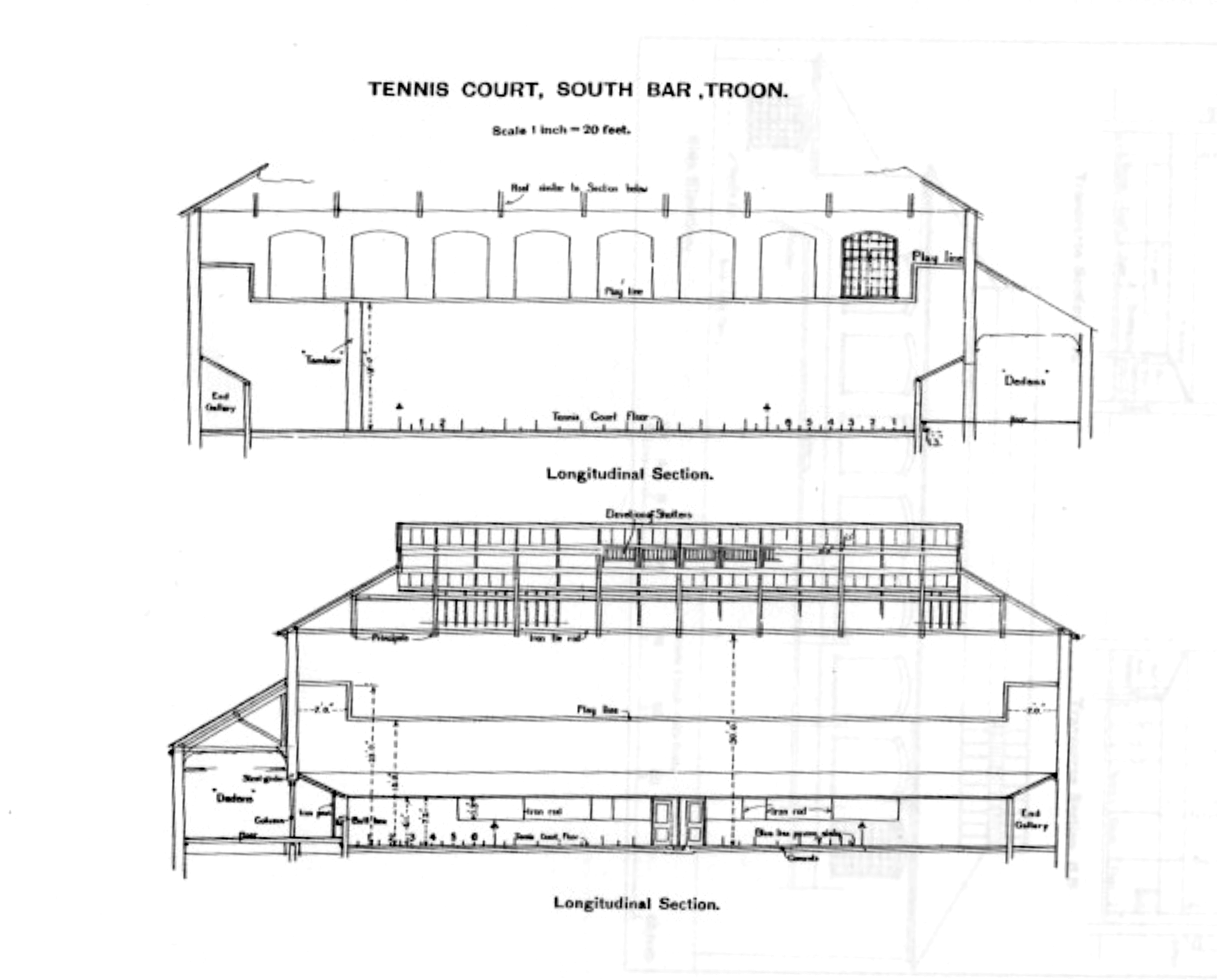
A Report to explore the History, Condition and Refurbishment was commissioned in 2008. Barry visited the site, and wrote the report in 2008. This topic is still being considered by theT&RA and interested parties in Scotland. The existing court is linked to a Care Home, and currently, the owner of the existing court is not interested in taking the proposals forward to bring back the game of real tennis in Troon.